 English
Author: Site Editor Publish Time: 2026-06-25 Origin: Site


Structural integrity fundamentally relies on matching the exact fastener mechanism to your chosen base material. Engineers and contractors face massive risks when selecting anchors blindly. Choosing a fastener without a deep understanding of its specific holding mechanics invites catastrophic load failure. You also risk severe code compliance violations or permanent structural damage. You need absolute certainty before drilling into solid concrete.
This guide explicitly defines the mechanical holding force of a wedge anchor. We translate this technical force into highly functional, real-world load capacities. Readers will discover an evidence-based framework for evaluating fastener suitability. You will learn how torque translates into friction. You will see why concrete strength dictates ultimate limits. Finally, we show you how to verify compliance for your specific application.
Mechanism: Wedge anchors rely exclusively on torque-controlled mechanical expansion (friction) to secure loads.
Base Material Limitation: They are strictly engineered for solid concrete and will fail or cause blowouts in brick, block, or hollow masonry.
Performance Dependency: Actual holding force is highly variable and depends on concrete compressive strength (PSI), embedment depth, and precise installation torque.
Code Compliance: Specification requires evaluating both static and dynamic loads against ICC-ES testing standards for cracked or uncracked concrete.
Let us define the core mechanical principles. This establishes a solid technical baseline for fastener selection.
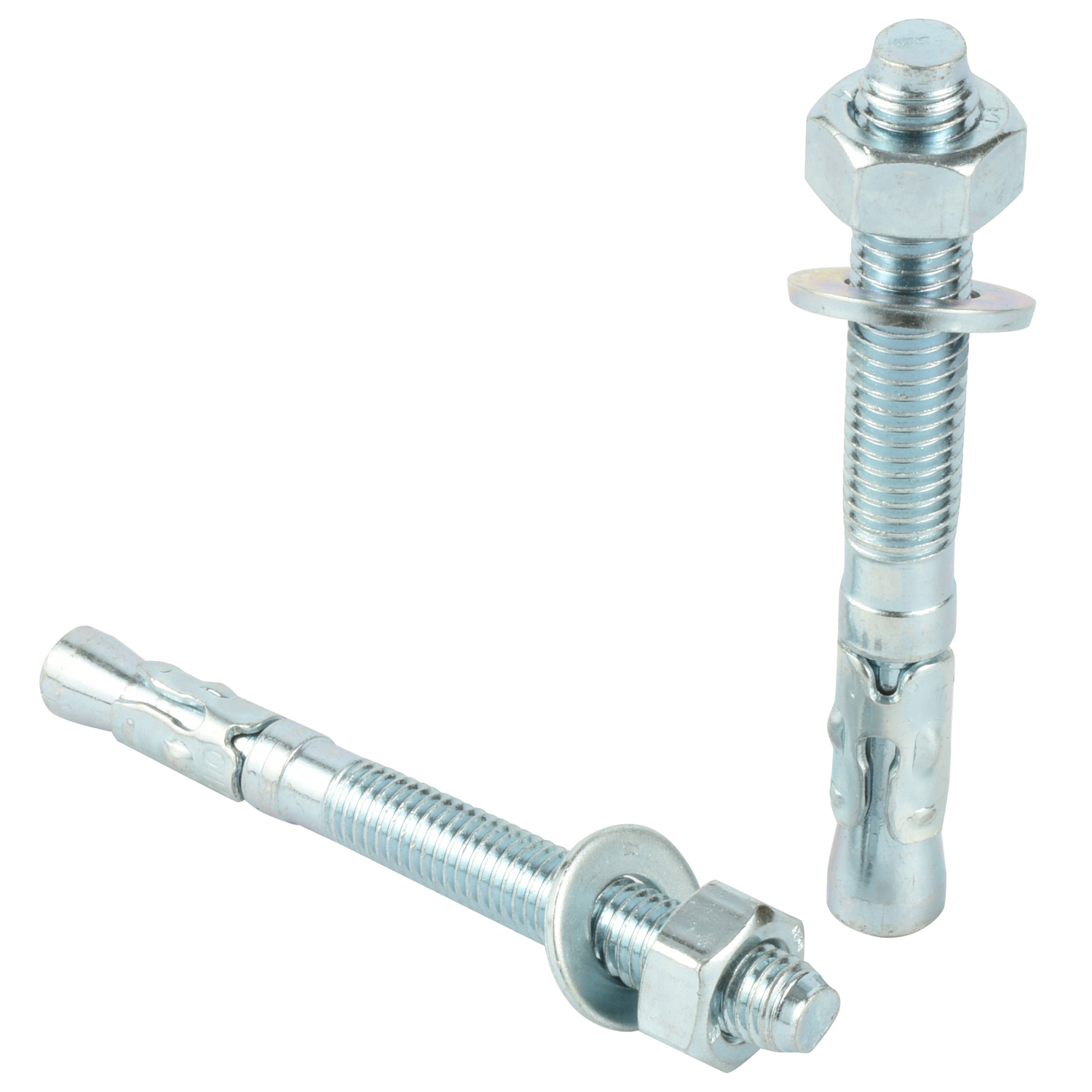
Tightening the anchor nut creates a powerful mechanical action. Turning the wrench pulls the threaded stud upward. The working end of this stud features a cone-shaped wedge. As this wedge moves up, it forces the surrounding expansion clip to expand outward. This engineered geometry translates rotational torque into immense lateral pressure.
The expansion clip permanently wedges against the internal walls of your drilled hole. This outward expansion creates extreme frictional resistance. Friction is the solitary force holding the hardware in place. The clip grips the aggregate and cement paste aggressively. You rely entirely on this outward pressure to hold massive structural loads safely.
The metal clip physically bites into the concrete pores. It deforms under pressure to match microscopic imperfections inside the drilled cylinder. Because of this aggressive bite, the fastener becomes a permanent fixture. You cannot extract it without destroying the surrounding substrate. The mechanical bond is permanent once you set the clip.
Many professionals misunderstand holding force. Holding power does not exist simply upon insertion. You must apply torque to engage the clip. A specific torque threshold must be met during installation. Reaching this torque establishes a critical pre-load. This tension keeps the fixture tight against the base material. Without proper pre-load, the joint will fail under dynamic stress.
Follow these steps to ensure proper mechanical engagement:
Drill a perfectly vertical hole matching the nominal diameter.
Evacuate all trapped silica dust from the cavity.
Drive the steel body through the fixture into the slab.
Apply manufacturer-specified rotational force using a calibrated wrench.
Decision-makers need to translate theoretical mechanical force into functional evaluation metrics. We divide these metrics into two primary stress categories.
Tensile strength measures how internal friction resists direct pull-out forces. Imagine heavy machinery hanging directly from a ceiling slab. Alternatively, picture a heavy load pulling straight away from a vertical wall. The expanded clip fights this outward force using intense grip. When tensile failure occurs, it usually manifests as a concrete cone blowout. The base material yields before the steel breaks.
Shear strength evaluates an entirely different stress plane. It measures how the solid steel body resists the guillotine effect. Think of a heavy electrical cabinet sliding down a wall. The steel shank itself blocks this downward motion. The diameter of the metal shaft primarily dictates shear capacity. Larger diameters offer significantly higher resistance against snapping.
A wedge anchor is only as strong as its host environment. Holding force is strictly capped by base material strength. Suppose you specify hardware rated for 5,000 lbs. It will fail much earlier if installed in 2,000 PSI concrete instead of 4,000 PSI concrete. Soft concrete simply crumbles under the extreme pressure exerted by the expansion clip.
Engineers never design structures to the ultimate tested failure load. Professional guidelines recommend a standard 4:1 safety ratio for static loads. You divide the ultimate failure load by four. This calculation determines your safe working load. This buffer protects against unexpected dynamic forces or minor installation errors.
Chart 1: Standard Safety Factor Load Reductions | ||
Ultimate Tensile Load (lbs) | Safety Factor Ratio | Safe Working Load (lbs) |
|---|---|---|
4,000 | 4:1 | 1,000 |
8,000 | 4:1 | 2,000 |
12,000 | 4:1 | 3,000 |
Contractors need a clear decision framework. Comparing holding forces across fastener categories prevents dangerous specification errors on the job site.
Wedge: They are strictly for solid concrete applications. They provide a much higher overall load capacity. The required drill hole size precisely equals the hardware diameter.
Sleeve: These fasteners disperse outward pressure over a much larger surface area. They are suitable for softer base materials like brick, hollow block, and mortar. However, they offer a noticeably lower ultimate holding capacity.
Wedge: These fasteners create permanent, heavy-duty static connections. Installers must use a calibrated torque wrench to set them properly. They require specific edge distances to prevent spalling.
Concrete Screws: They utilize mechanical interlock by cutting literal threads into the concrete. They are completely removable. They work better for close edge distances. Professionals typically use them for light-to-medium loads.
Wedge: A wedge anchor provides immediate, ready-to-use load capacity. There is absolutely zero cure time involved. It relies entirely on friction.
Chemical: These rely on complex chemical bonding and 100% surface contact. They are best for high-vibration applications or extreme edge-distance placements. They require meticulous hole cleaning and strict temperature controls during installation.
Practical experience reveals numerous installation risks. These common field errors easily lead to catastrophic connection failure.
Using a worn bit ruins holding capacity instantly. The wrong size bit is equally dangerous. Masonry bits must strictly match the fastener diameter. An oversized hole reduces internal friction drastically. It eliminates holding power entirely. ANSI-compliant drill bits are mandatory for structural holds.
Failing to clean concrete dust is a critical and common mistake. Leftover dust acts like a dry lubricant. It prevents the expansion clip from biting into the solid wall. This mistake frequently causes the hardware to spin endlessly during tightening. Always use compressed air and a wire brush.
Installers must space drilling locations properly. Installing too close to an edge is highly risky. Installing too close to another fastener is equally bad. The internal stress cones overlap under heavy loads. This overlap leads to sudden concrete blowout or dangerous surface spalling. Always reference manufacturer spacing guidelines.
Under-torquing is a widespread industry issue. It fails to engage the expansion clip fully. The connection will inevitably loosen over time. Over-torquing is just as destructive. Excessive force can snap the steel body. It can also crush the surrounding concrete structure. Always mandate the use of a calibrated torque wrench.
Engineering professionals focus heavily on rigorous compliance and code requirements. They never guess when structural integrity and human lives are at stake.
Structural engineers constantly look for ESR numbers. Evaluation Service Report (ESR) numbers verify independently tested capacities. These reports prove the fastener meets international building codes. You should always select evaluated hardware for critical structural applications. Non-evaluated hardware poses unacceptable liability risks.
Standard fasteners may lose friction over time. Concrete naturally cracks as it ages or shifts under stress. If a crack intersects the drilled hole, standard friction drops immediately. The hole widens microscopically. Specific seismic-rated fasteners are strictly required for cracked concrete environments. They feature specialized clips designed to maintain grip even when the hole expands.
Environmental corrosion degrades the expansion clip rapidly. Rust ultimately destroys the frictional holding force. You must match the steel grade to the local environment.
Chart 2: Anti-Corrosion Material Selection Matrix | ||
Material Type | Optimal Environment | Corrosion Resistance |
|---|---|---|
Zinc-Plated Carbon Steel | Indoor, strictly dry locations | Low |
Hot-Dipped Galvanized | Humid, standard exterior environments | Medium |
304/316 Stainless Steel | Corrosive, marine, or chemical plants | High |
Let us summarize the primary decision criteria. A wedge anchor utilizes immense mechanical friction for superior holding force. However, its efficacy is strictly tied to specific conditions. You must use it exclusively in solid concrete applications. You must ensure proper hole tolerance during drilling. You must apply the exact correct torque.
Take specific action before your next structural installation. Consult the manufacturer technical data sheets carefully. Match your specific load requirements and concrete PSI with the correct hardware. Verify the exact diameter and embedment depth against your engineering plans. Never leave structural safety to chance.
A: No. The highly concentrated expansion force will crack or blow out brittle or hollow materials. Use a sleeve anchor or toggle bolt instead.
A: The nut and washer can be removed, but the anchor body and expansion clip are permanently wedged in the concrete. It must be cut off flush or driven deeper into the hole.
A: Typically caused by drilling the hole too large, using a worn drill bit, or failing to clear the concrete dust out of the hole before insertion, preventing the clip from catching.
A: Yes, up to a point. Deeper embedment generally increases tensile strength, provided the concrete is thick enough to prevent bottom blow-out. Always follow manufacturer minimum embedment lines.
