 English
Author: Site Editor Publish Time: 2026-06-27 Origin: Site


Incorrect hole sizing represents the primary cause of masonry fastening failures. You simply cannot afford to guess drill bit sizes on the job site. A poorly matched hole diminishes load capacity instantly. It also creates severe structural liability for your entire project. Our objective is to eliminate this dangerous guesswork. We provide definitive sizing rules for your 5/8" installation projects. We also outline critical tooling requirements and precise installation specifications. We base these recommendations entirely on standard ANSI tolerances. They reflect the most rigorous commercial construction best practices available today. You will discover exactly how to select the right drill bit. You will learn to prepare the cavity properly. You will also understand the exact torque requirements needed for a perfectly secure hold. Let us dive into the technical details to ensure optimal structural safety.
The Golden Rule: A 5/8" concrete wedge anchor requires an exactly matched 5/8" masonry drill bit.
Bit Standards: Always use ANSI-standard carbide-tipped bits to prevent out-of-round holes that compromise anchor grip.
Depth Requirement: The drilled hole must be at least 1/2" to 1" deeper than the intended anchor embedment depth to allow for dust displacement.
Torque: A 5/8" anchor typically requires 75 to 90 ft-lbs of installation torque, depending on the manufacturer and base material.
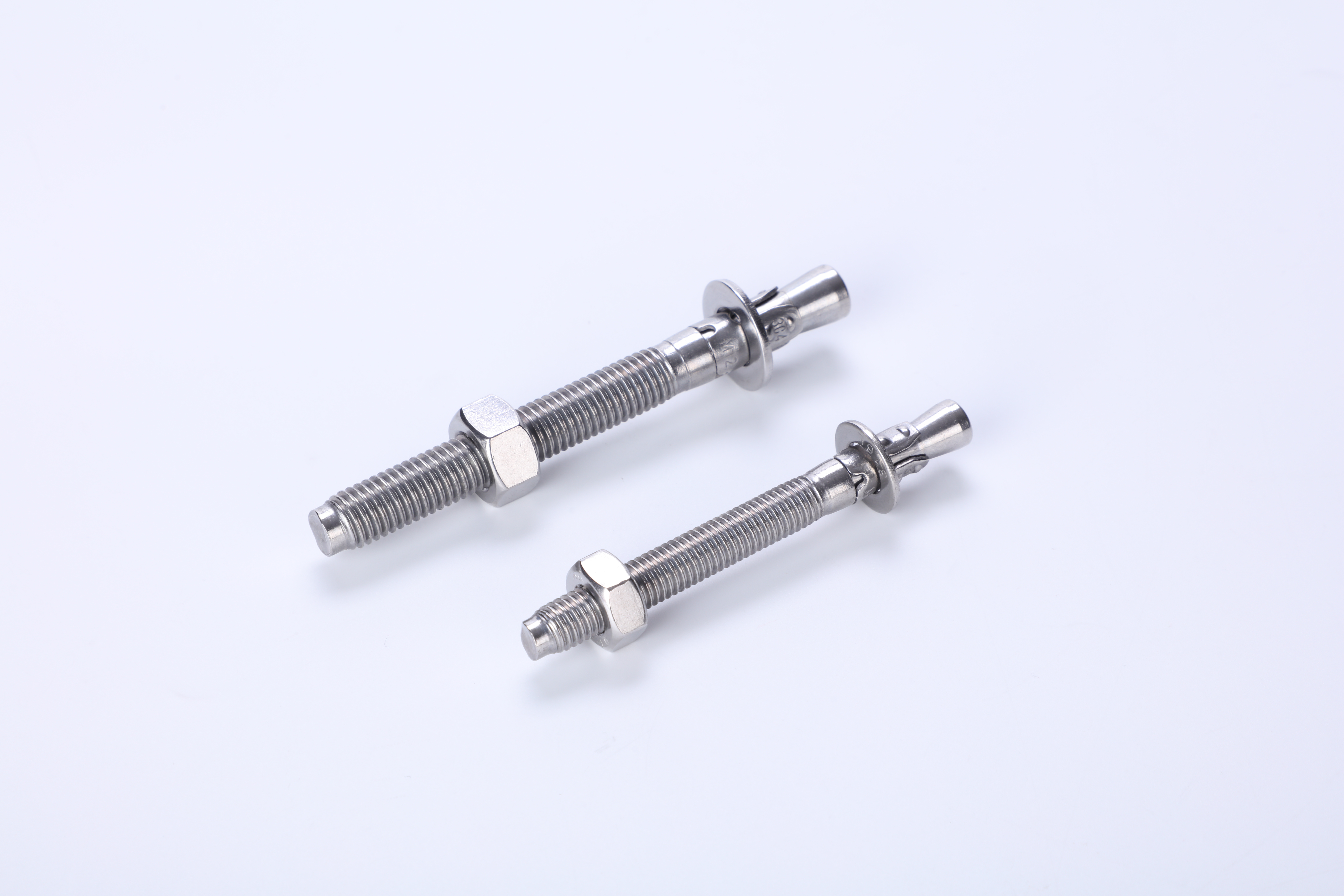
When installing a standard concrete wedge anchor, you must follow the one-to-one sizing principle exactly. The drill bit diameter must perfectly match the stated diameter of the fastener. If you purchase a 5/8" fastener, you drill a 5/8" hole. You never downsize the bit to create a tighter fit. You also never upsize the bit to make insertion easier. The hardware relies entirely on this exact geometric tolerance to function. Installers must trust the manufacturer sizing.
These heavy-duty fasteners rely strictly on friction and mechanical expansion. When you tighten the nut, the stud pulls upward. This action forces a metal clip outward against the masonry walls. A worn bit often creates a marginally wider cavity. Non-ANSI bits frequently lack strict manufacturing tolerances. They wobble during operation. This wobbling hollows out the base material significantly. The resulting cavity becomes too wide for the clip. The expansion mechanism will fail to bite into the surrounding masonry. You cannot salvage a cavity drilled too wide.
Many contractors confuse sizing rules across different fastener families. Sleeve models typically follow the identical one-to-one rule. The outer sleeve diameter dictates the necessary bit size. However, internal-thread drop-in models require a distinctly larger bit. A 5/8" drop-in version often demands a 7/8" masonry bit. Always verify the specific hardware type before you begin drilling. Assuming all hardware follows the one-to-one rule causes catastrophic installation errors.
You must seat the fastener deeply enough to achieve its advertised holding value. A standard 5/8" fastener typically requires a minimum embedment depth. This depth generally ranges between 2-3/4" and 3-1/4". The exact requirement depends on the specific brand. It also depends on the substrate strength. Failing to reach this minimum depth severely compromises the shear and tension limits. A shallow installation invites sudden pull-out failures.
You need a simple formula for the perfect cavity. Drill your cavity to the required embedment depth plus a minimum of 1/2" for dust clearance. Many professionals add a full 1" for safety. Drilling extra space allows displaced masonry dust to settle out of the way. It prevents the fastener from bottoming out early. Bottoming out on compacted dust causes immediate installation failure. You cannot hammer the stud further down once it hits compressed debris.
Proper tensioning activates the expansion clip correctly. A 5/8" fastener generally requires approximately 75 to 90 ft-lbs of torque. You must use a calibrated torque wrench for this step. Do not rely on impact drivers or sheer physical feeling.
Over-torquing: This poses a severe risk. It crushes the internal masonry structure. It eventually strips the base entirely, destroying the friction hold.
Under-torquing: This leaves the expansion clip loose. It prevents the necessary friction lock. The hardware will slip under load.
Engineers enforce strict placement rules to prevent base material fracture. You cannot place these fasteners too closely together. A general rule requires spacing them at least 10 fastener diameters apart. For a 5/8" stud, you need 6-1/4" between installation points. Edge distance remains equally vital. You must keep them at least 5 diameters away from an unsupported edge. This translates to a 3-1/8" minimum edge distance. Placing them closer causes the masonry to crack and break away.
Specification Parameter | 5/8" Anchor Requirement | Why It Matters |
|---|---|---|
Drill Bit Size | 5/8" (ANSI Certified) | Ensures proper friction fit for the expansion clip. |
Minimum Embedment | 2-3/4" to 3-1/4" | Guarantees the rated tension and shear load capacities. |
Over-Drill Depth | Embedment + 1/2" to 1" | Provides a collection zone for residual masonry dust. |
Installation Torque | 75 to 90 ft-lbs | Expands the clip correctly without crushing the substrate. |
Minimum Spacing | 6-1/4" (10x Diameter) | Prevents overlapping stress cones and substrate fracture. |
B2B buyers and contractors must specify ANSI-compliant bits. This certification guarantees precise sizing on a microscopic level. An ANSI 5/8" bit ensures you drill a true 5/8" cavity. Cheaper imported bits often wander. They drill oversized cavities due to poor machining. A heavy-duty concrete anchor will simply spin loosely inside an oversized hole. You must insist on carbide-tipped heads. The carbide material withstands the extreme heat generated during masonry penetration.
You must select the right shank type for your equipment. SDS-Plus shanks handle 5/8" applications adequately. They suit occasional commercial tasks well. However, SDS-Max shanks offer vastly superior power transfer. They provide faster penetration rates overall. They also offer better longevity for high-volume commercial installations. Choose SDS-Max when drilling hundreds of cavities daily. The larger shank prevents snapping under heavy load.
We strongly advise against standard hammer drills for these heavy-duty installations. Standard hammer drills lack the necessary impact energy. They struggle immensely when boring 5/8" holes in aged, hardened masonry. A true rotary hammer remains the mandatory tool here. It delivers powerful electropneumatic blows automatically. It crushes the material efficiently without requiring excessive physical pushing. A rotary hammer guarantees perfectly round cavities. It also saves your arms during long, demanding shifts.
You will eventually strike reinforcing steel inside structural slabs. When your bit hits rebar, drilling progress halts immediately. The tool might also kick back violently. You have two primary protocols to handle this scenario. First, you can relocate the installation point entirely. You must patch the abandoned cavity using high-strength structural epoxy. Second, you can use specialized rebar cutters. You swap your masonry bit for a rebar-cutting bit. You bore through the steel carefully. You then switch back to the masonry bit to finish the proper depth. Always consult the structural engineer before cutting internal rebar.
Operator error frequently causes oval-shaped cavities. You must start drilling perfectly perpendicular to the substrate. Let the electropneumatic tool do the heavy work. Do not force the bit at an angle. Angled drilling creates a widened entry point instantly. The expansion clip will spin freely when tightened later. A spinning stud cannot achieve any load capacity. Maintain a firm, straight grip throughout the entire plunging motion.
Drilling represents only step one in the process. You must remove all residual dust from the cavity before inserting the hardware. Leftover dust acts like a dry lubricant. It destroys the necessary friction bond. You must follow the rigorous OSHA-compliant cleaning method to ensure maximum friction.
Follow this exact numbered procedure:
Blow: Use an air compressor equipped with a long nozzle. Blow compressed air directly into the bottom of the cavity to force loose dust upward and out.
Brush: Insert a stiff wire brush sized exactly for a 5/8" cavity. Scrub the interior walls vigorously using a twisting motion to dislodge caked-on powder.
Blow: Use the compressed air nozzle a second time. Clear out all the newly loosened dust completely. The cavity must be visibly clear of debris.
The surrounding environment dictates your material choice entirely. You must match the hardware to the specific exposure conditions of your project. Use Zinc-Plated carbon steel for dry indoor applications only. Zinc offers minimal moisture protection. Select Hot-Dipped Galvanized models for moist or exterior environments. They offer robust, thick rust resistance. Choose 304 or 316 Stainless Steel for highly corrosive settings. Stainless steel remains absolutely mandatory for submerged applications or chemical exposure environments.
Commercial projects demand strict regulatory compliance today. Advise your procurement team to shortlist approved products exclusively. Look for ICC-ES (International Code Council) approvals for North American projects. European structural projects require ETA (European Technical Assessment) certifications. These labels guarantee rigorous third-party testing. They authorize the hardware for critical structural applications. Non-certified hardware presents a massive legal liability in commercial construction.
You must verify your substrate strength before finalizing any hardware orders. Substrate strength is typically measured in PSI. Soft masonry behaves very differently than high-PSI structural pours. Consult the manufacturer load tables carefully. They provide specific shear and tension capacities based on your intended embedment depth. Compare your structural engineer's requirements against these published tables. Order your hardware only after confirming these technical limits align perfectly.
Your structural safety depends on strict alignment across the board. You must match the fastener size exactly to the bit tolerance. You must also follow precise installation techniques. A 5/8" stud demands a true 5/8" hole. Investing in high-quality, ANSI-rated drill bits remains critical. The tooling is just as important as the hardware itself. Do not cut corners on preparation. You will compromise the entire fastening system. Are you ready to secure your next heavy-duty project? Explore our comprehensive product catalog for reliable 5/8" anchors. We also supply compatible ANSI-rated SDS drill bits. Reach out to our engineering support contact today. We can assist you with project-specific load calculations. We help you build confidently, efficiently, and safely.
A: The anchor will spin continuously inside the cavity. It will fail to expand and grip the surrounding base material. You cannot fix or tighten it once this happens. The hole must be completely abandoned. You will need to patch it with structural epoxy and drill a new hole nearby.
A: No. Standard wood or metal bits lack the carbide tip required for masonry. The abrasive material will destroy a standard bit within seconds. The bit will likely melt or snap off inside the hole. This creates severe safety hazards and ruins your drilling substrate permanently.
A: Wedge anchors are engineered as permanent fixtures. You cannot easily pull them out once they expand. The standard fix involves cutting the threaded stud flush against the surface. You use an angle grinder equipped with a metal cut-off wheel. You then patch over the remaining embedded steel.
A: The 5/8" measurement refers to the nominal diameter of the threaded stud itself. However, manufacturers engineer the expansion clip carefully. The clip fits snugly within the precise 5/8" drilled hole before expansion. You do not need a larger hole to accommodate the unexpanded clip mechanism.
