 English
Author: Site Editor Publish Time: 2026-06-22 Origin: Site


Installing heavy-duty fasteners correctly demands absolute precision right from the very first drilled hole. If you wonder what size drill bit you need, the answer is simple. A 3/8" wedge anchor always requires an exact 3/8" masonry drill bit. However, sizing is just the baseline requirement for success. Many installers mistakenly assume a matching bit guarantees a secure hold. In reality, improper hole depth, inadequate hole cleaning, and incorrect torque are the primary causes of anchor pull-out and catastrophic structural failure. You simply cannot ignore these variables.
This comprehensive guide covers precise drill bit specifications, minimum embedment depths, and standard torque requirements. We also provide actionable advice for troubleshooting common installation failures. By following these guidelines, you will ensure code-compliant fastening for your most critical structural projects. Proper technique guarantees maximum holding power and structural integrity.
1:1 Sizing Rule: A 3/8" wedge anchor requires exactly a 3/8" ANSI-standard masonry drill bit. Do not oversize or undersize.
Over-Drilling Requirement: Always drill the hole a minimum of 1/2" deeper than the anchor’s intended embedment depth to allow room for concrete dust.
Torque Specifications: A standard 3/8" wedge anchor typically requires 25 to 30 ft-lbs of torque for proper expansion.
Bit Wear Warning: Using worn or non-ANSI compliant drill bits creates out-of-tolerance holes, leading to anchors that spin without gripping.
Understanding the sizing logic behind concrete fasteners prevents costly job site errors. Unlike sleeve varieties or drop-in designs, a wedge anchor requires a hole diameter identical to its own outside diameter. This 1:1 sizing rule exists because the fastener body must fit snugly against the concrete walls. When you apply torque, the expansion clip rides up the tapered cone. It then wedges tightly against the surrounding base material. If you drill the hole even slightly too large, the clip cannot create enough friction to expand.
You must strictly use ANSI-compliant carbide-tipped bits. The American National Standards Institute (ANSI) established the B212.15 standard specifically for masonry drilling. ANSI bits guarantee precise tolerances. Non-standard or generic masonry bits often have unacceptable diameter variations. These loose tolerances create oversized holes. Consequently, the anchor will spin freely, entirely compromising your holding values.
Tool selection heavily influences hole quality. You should contrast a standard hammer drill against an SDS Rotary Hammer. Standard hammer drills generate weak mechanical impacts. They often wander upon starting, creating oval-shaped holes. SDS Rotary Hammers utilize pneumatic action. They deliver immense impact energy directly to the bit. This energy pulverizes hard concrete efficiently. SDS tools ensure precise, perfectly round holes necessary for structural integrity.
Comparison Chart: SDS Rotary Hammer vs. Standard Hammer Drill | ||
Feature | SDS Rotary Hammer | Standard Hammer Drill |
|---|---|---|
Impact Mechanism | Pneumatic piston system | Mechanical cam plates |
Hole Quality | Precise, perfectly round | Prone to oval shapes |
Concrete Hardness | Excels in aged, high-PSI concrete | Best for masonry or soft brick |
Drilling Speed | Extremely fast and efficient | Slow, requires high user fatigue |
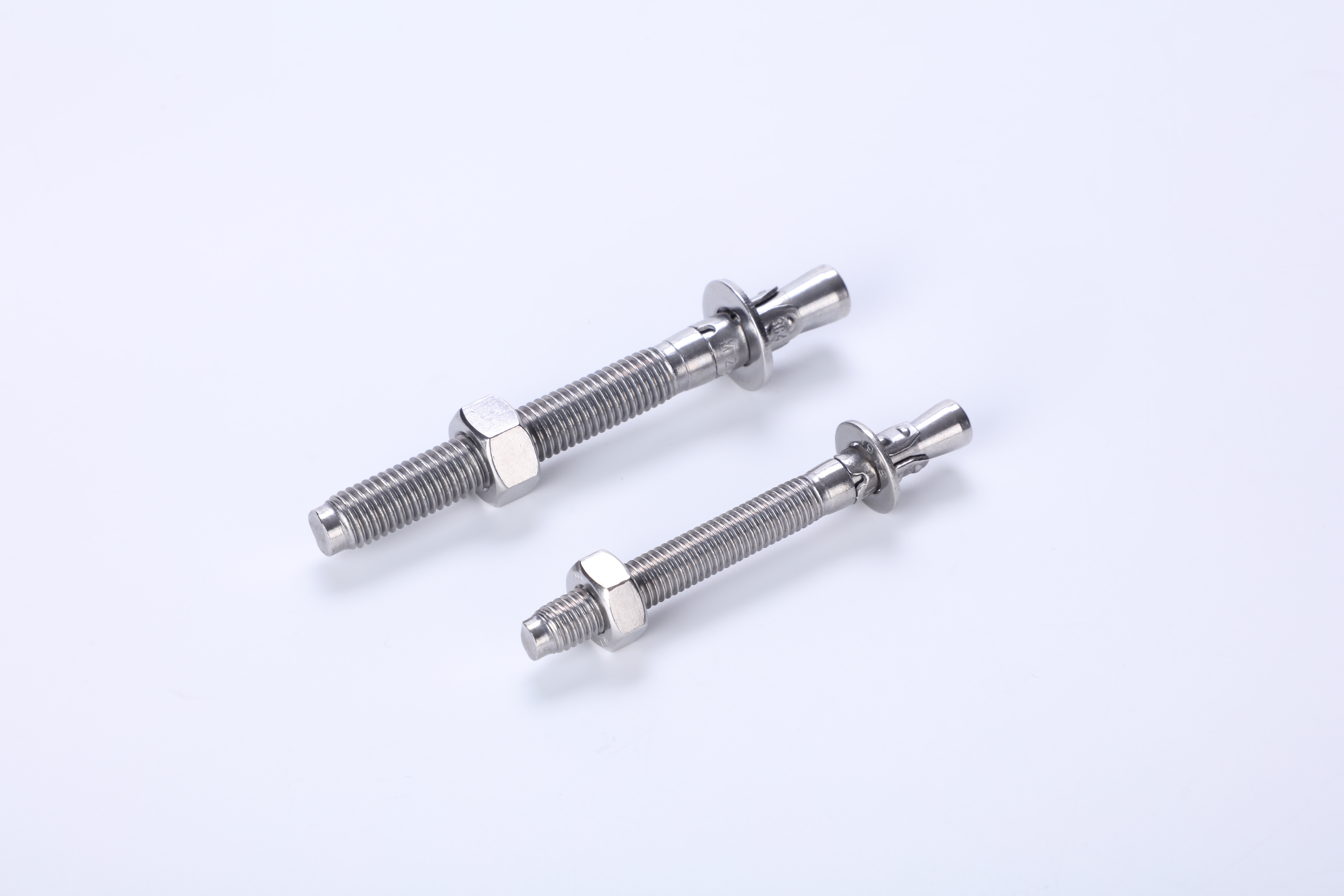
Embedment depth dictates the ultimate pull-out strength of your installation. For a standard 3/8" fastener, the minimum embedment depth typically ranges from 1-1/2" to 1-5/8" into the solid base material. You must measure this depth exclusively within the concrete. Do not include the thickness of the fixture you are fastening. If your base plate is 1/2" thick, your overall fastener length must account for both the embedment and the fixture thickness.
The "Plus Half-Inch" dust rule is a mandatory industry practice. You must drill the hole at least 1/2" to 1" deeper than your required embedment depth. Drilling concrete creates significant amounts of pulverized dust. Even rigorous cleaning rarely removes every particle. If you drill exactly to the required depth, residual dust packs at the bottom. This trapped dust prevents the anchor from reaching full embedment. The fastener will bottom out prematurely, leaving the fixture loose.
Maintaining consistent depth across multiple holes requires simple implementation tricks. You can use the built-in depth gauge on your hammer drill. Set the metal rod to bottom out against the concrete surface when the bit reaches the correct depth. Alternatively, wrap brightly colored electrical tape around the drill bit flutes. This creates a highly visible depth indicator. These visual cues guarantee consistency, ensuring every single hole meets engineering specifications.
Step 1: Determine the thickness of your fixture or base plate.
Step 2: Add the manufacturer-specified minimum embedment depth (e.g., 1-5/8").
Step 3: Add the thickness of the nut and washer (typically around 1/2").
Step 4: Select a fastener length that meets or exceeds this calculated total.
Flawless execution requires a strict Standard Operating Procedure (SOP). Drilling technique directly affects load capacity. You must maintain a strict 90-degree angle to the concrete surface throughout the entire drilling process. Leaning the drill or wobbling it enlarges the top of the hole. Oval-shaped holes drastically reduce the fastener's load capacity. If the hole tapers outward, the expansion clip cannot grip the upper concrete layers effectively.
Your hole cleaning protocol is arguably the most neglected installation step. Friction dictates holding power. Concrete dust acts as a dry lubricant, destroying that friction. You must follow a mandatory three-step cleaning process for every hole.
Initial Blowout: Insert a blowout bulb nozzle or compressed air wand completely to the bottom of the hole. Blow out the loose dust thoroughly.
Wire Brushing: Insert a stiff wire brush matching the 3/8" hole diameter. Vigorously scrub the hole walls up and down several times to dislodge caked-on dust.
Final Blowout: Use the compressed air or blowout bulb once more. Remove all freshly loosened debris until the air blows completely clear.
You must understand the compliance implications of this step. Engineering technical data sheets and local building codes calculate load capacities based on completely dust-free holes. Skipping the cleaning protocol entirely invalidates manufacturer load ratings. An uncleaned hole transforms a structural connection into a hazardous liability.
Driving the fastener requires preparatory steps to avoid catastrophic thread damage. Before picking up your hammer, thread the nut onto the anchor until it sits perfectly flush against the top edge. This simple pre-installation step protects the internal threads. Striking an exposed threaded rod mushrooms the steel. A mushroomed top prevents you from removing or tightening the nut later. Always leave the washer directly under the nut during this step.
Driving the anchor involves deliberate force. Insert the bottom end through your fixture hole and into the cleaned concrete hole. Use a heavy hammer to drive it downward. Continue hammering until the washer seats firmly against the fixture surface. Ensure the fastener feels solid and does not bounce back excessively. If it bounces heavily, you likely hit trapped dust or an obstruction.
Applying torque activates the expansion mechanism. You must adhere to specific torque ranges. A standard 3/8" wedge anchor typically requires exactly 25 to 30 ft-lbs of torque. Achieving this value demands a calibrated torque wrench. Never rely on guesswork or "feel" when securing structural elements.
You must heed a critical warning regarding modern tools. Never use impact drivers to tighten these fasteners. Impact drivers apply violent, unmeasured rotational force. Over-torquing snaps the steel shaft entirely. Alternatively, excessive force crushes the concrete surrounding the expansion clip, destroying the base material. Use a manual torque wrench to guarantee precise, smooth expansion.
Even experienced installers encounter unpredictable job site conditions. Knowing how to troubleshoot failures prevents structural weaknesses. The most common failure occurs when the anchor spins endlessly in the hole without tightening. Several root causes trigger this issue. You might have used a worn drill bit, creating an undersized hole that binds the clip prematurely. You may have hit a hidden void in the concrete. Sometimes, crumbling, low-PSI concrete simply cannot hold the expanding clip. When an anchor spins, the hole is permanently compromised. You must abandon it, fill it with high-strength epoxy, and drill a new hole safely away from the failed spot.
Hitting steel rebar presents another frequent challenge. You will instantly feel the drill stop progressing. The drill bit might catch aggressively, twisting your wrists. Stop drilling immediately. Assess your situation. If your fixture design allows relocation, move the hole. Do not attempt to force the fastener into a shallow hole above the rebar. If relocation is impossible, you may need specialized rebar cutters, but this often compromises structural steel. Always consult a structural engineer before cutting embedded rebar.
Spalling or cracking concrete signifies a severe placement error. This typically occurs due to insufficient edge distance or improper anchor spacing. As the clip expands, it exerts immense outward pressure on the concrete. If you drill too close to an unsupported edge, this pressure blows out the side of the concrete block. Generally, you must maintain a minimum of 3-3/4" from unsupported edges for a 3/8" fastener. Similarly, space multiple anchors far enough apart so their stress cones do not overlap. Proper spacing prevents cascading concrete failure.
Matching the material to your environmental conditions ensures long-term durability. The right choice prevents catastrophic corrosion and structural collapse. Fasteners come in three primary metal finishes.
Zinc-plated carbon steel serves as the standard baseline. Manufacturers recommend this finish strictly for dry, indoor environments featuring zero moisture exposure. It provides a highly cost-effective solution for interior framing, racking, or HVAC installations. However, zinc plating is extremely thin. It remains vulnerable to rust if exposed to humidity or condensation.
Hot-Dipped Galvanized (HDG) steel offers robust mid-tier protection. The hot-dipping process coats the steel in a thick, sacrificial zinc layer. HDG is perfectly suited for exterior applications. It withstands moderate moisture, rain, and snow. You must also use HDG fasteners when anchoring into chemically treated lumber, as the chemicals rapidly corrode standard zinc plating.
Stainless steel variants, specifically 304 and 316 grades, provide ultimate corrosion resistance. You must choose stainless steel for submerged applications, marine environments, or highly corrosive industrial facilities. They contain chromium and nickel, preventing rust entirely. While they cost significantly more, they guarantee permanent structural safety in harsh conditions.
Material Selection Guide for 3/8" Anchors | |||
Material Type | Ideal Environment | Corrosion Resistance | Typical Applications |
|---|---|---|---|
Zinc-Plated Steel | Dry, Indoor Only | Low | Interior drywall track, shelving, HVAC |
Hot-Dipped Galvanized | Exterior, Wet | Moderate to High | Outdoor signage, treated lumber sills |
304/316 Stainless Steel | Marine, Submerged, Chemical | Extremely High | Pool handrails, coastal construction, food processing |
You must evaluate your specific environmental conditions carefully before purchasing. Never sacrifice long-term safety to save a few dollars on finishes. We recommend linking your project requirements to official manufacturer technical submittal sheets to verify material suitability.
Securing heavy fixtures requires far more than merely matching drill bit numbers. A successful 3/8" installation relies equally on using the correct 3/8" ANSI-rated masonry bit, achieving proper embedment depth, and applying precise torque. By adhering to the "plus half-inch" dust rule and strictly following hole cleaning protocols, you guarantee maximum load capacity.
You must always remember strict safety limitations. These fasteners are engineered strictly for solid, high-compressive-strength concrete. Never use them in brick, hollow cinder block, or mortar joints, as the expansion forces will shatter these brittle materials. Always prioritize structural safety above convenience.
We encourage you to implement these best practices immediately. Before starting your next project, consult official technical data sheets for specific load values. Browse reliable catalogs to select the appropriate anchor material and secure ANSI-rated drill bits to ensure code-compliant fastening every single time.
A: No. A 10mm bit is slightly larger than 3/8" (9.525mm), which will result in an oversized hole and anchor failure.
A: No. Wedge anchors require the high compressive strength of solid concrete. For masonry or hollow block, sleeve anchors or adhesive anchors must be used.
A: Generally, a minimum of 10 anchor diameters (3-3/4") from an unsupported edge is required to prevent the expansion clip from cracking the concrete.
A: Over-drilling depth is rarely an issue for the anchor's performance, provided the threads still protrude enough to secure the fixture. However, drilling completely through a suspended slab should be avoided.
