 English
Author: Site Editor Publish Time: 2026-06-26 Origin: Site


Drilling into solid masonry requires absolute precision, not guesswork. If you choose the wrong drill bit size, your fastening project will inevitably fail under heavy loads. Exact hole sizing in concrete fastening remains critically important for both safety and long-term structural integrity. Incorrect tolerances lead directly to severe anchor failure, failed safety inspections, and incredibly costly rework on your job site.
Fortunately, the immediate answer is usually definitive. For most standard 1/2-inch mechanical fasteners, you need an exact 1/2-inch masonry drill bit. This straightforward rule applies to the vast majority of heavy-duty applications.
This guide provides deep technical specifications and differentiates between various anchor types. We will establish standard operating procedures for safe, compliant installation. You will learn how to match shank types, handle accidental rebar strikes, and secure your fixtures properly. By following these guidelines, you ensure every installation meets strict engineering standards.
Standard Rule of Thumb: A 1/2" concrete wedge anchor requires an exact 1/2" ANSI-compliant masonry drill bit.
The Exceptions: Drop-in anchors and large-diameter concrete screws of the same 1/2" thread size require differently sized bits based on their outer diameter.
Tooling Standards: Always use ANSI standard B212.15 carbide-tipped bits to ensure strict hole tolerance.
Execution Mandate: Drilling the hole is only 50% of the job; proper depth calculation and rigorous hole cleaning are non-negotiable for achieving published holding values.
Mechanical fasteners operate on a strict 1:1 sizing ratio principle. Manufacturers engineer these fasteners precisely. The solid anchor body matches the nominal diameter listed on the packaging. Therefore, you must drill a hole matching this exact diameter. A standard 1/2-inch concrete anchor requires a 1/2-inch drill bit. It seems incredibly simple, yet errors happen daily.
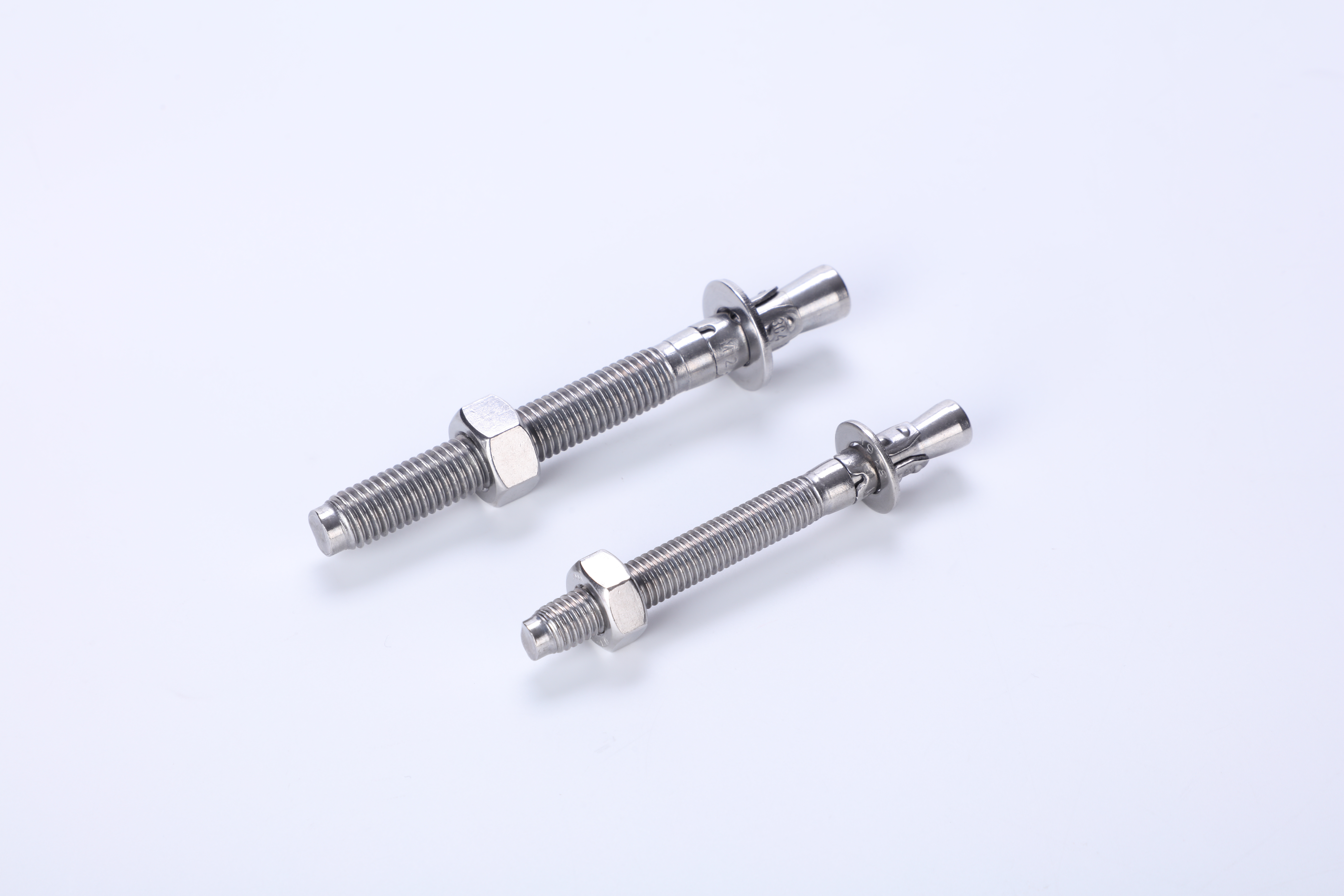
Manufacturers design the expansion clip to sit perfectly flush against the anchor body. The clip wraps tightly around a tapered cone at the bottom. As you tighten the top nut, the stud pulls upward. This mechanical action forces the clip outward against the concrete walls. Friction takes over completely. If you drill the hole too wide, the clip never catches the wall properly.
Many installers make a critical mistake here. They assume a slightly larger hole makes installation easier. They might use a metric equivalent like a 13mm bit. A 13mm bit measures exactly 0.511 inches. That slight oversize ruins the grip entirely. The fastener simply spins freely inside the hole. The installation will inevitably fail formal pull-out tests.
Common Mistakes:
Using a worn bit wobbling in the chuck, which carves an oval hole.
Relying on non-standard metric bits for imperial fasteners.
Reaming the hole by intentionally tilting the drill during operation.
Not every fastener follows the standard baseline rule. You must first identify your specific anchor category. Different mechanical designs require completely different hole tolerances. Below is a detailed breakdown of how sizing changes based on the fastener type.
Anchor Category | Thread / Nominal Size | Required Drill Bit Size | Primary Application |
|---|---|---|---|
Wedge Anchor | 1/2" | 1/2" | Heavy-duty structural fastening in solid concrete. |
Sleeve Anchor | 1/2" | 1/2" | Medium-duty fastening in block, brick, or masonry. |
Drop-In Anchor | 1/2" (Internal Thread) | 5/8" (Check Specs) | Overhead fixtures, threaded rod suspension. |
Concrete Screw | 1/2" | 3/8" or 7/16" | Removable applications, temporary structural supports. |
These represent the absolute industry standard. They work best in heavy-duty, solid concrete applications. The bit size remains exactly 1/2 inch. You hammer the fastener directly into the pre-drilled hole. The robust expansion clip engages immediately upon torquing the nut.
These also utilize a 1/2-inch drill bit. However, you must understand a key physical distinction. The 1/2-inch measurement refers entirely to the outside diameter of the sleeve. It does not refer to the inner threaded bolt. The inner bolt is physically smaller. They expand over a larger surface area.
These fasteners change the sizing rules completely. They feature internal female threads. You thread a standard 1/2-inch bolt into them after installation. Because the anchor receives a 1/2-inch bolt, the outer expansion shield is much wider. You typically need a 5/8-inch drill bit. Always check the manufacturer specifications before drilling. The outer diameter strictly dictates the required hole size.
These heavy-duty screws cut their own threads directly into the masonry. Therefore, they require a smaller pre-drilled hole. The hardened steel threads need solid material to bite into. A 1/2-inch concrete screw usually requires a 3/8-inch or 7/16-inch bit. The specific brand determines the exact requirement. If you drill a 1/2-inch hole, the screw will simply fall out.
Buying any generic masonry bit is a massive liability. Precision machining dictates the success of your installation. You must select professional-grade tooling designed specifically for structural applications.
You must look for the ANSI certification stamp. Specifically, look for the B212.15 standard. This critical certification guarantees exact machining tolerances. A non-certified bit might drill a slightly oversized hole from day one. ANSI certification ensures the bit's carbide tip prevents over-drilling. These compliant bits ensure your fasteners consistently achieve maximum published holding capacity.
Your rotary hammer drill chuck dictates the shank type. SDS-Plus is perfect for 1/2-inch holes. It provides excellent percussive energy transfer. The drill bit snaps securely into the chuck. This clever design prevents the bit from slipping or deflecting under load. SDS-Max serves much heavier, larger applications. You rarely need SDS-Max equipment for a standard half-inch hole. Always match the bit shank perfectly to your specific tool.
You generally choose between 2-cutter and 4-cutter tip designs. We highly recommend 4-cutter configurations for structural work. They offer significantly better longevity. They also drill perfectly round holes. Most importantly, they reduce risks when hitting embedded rebar. A 2-cutter bit often catches on steel and binds violently. A 4-cutter tip grinds through or stops smoothly. This critical feature protects both the power tool and your wrists.
Execution determines ultimate safety. Drilling the hole perfectly represents only half the battle. Follow this proven installation framework to guarantee structural integrity.
Step 1: Calculating Hole Depth. Depth calculation prevents massive headaches later. You must drill deeper than the intended embedment depth. Always drill at least 1/2 inch deeper than the anchor needs. This extra space serves a crucial purpose. It leaves room for displaced dust to settle. If the hole is too shallow, the fastener bottoms out early.
Step 2: Drilling the Hole. Use a professional rotary hammer drill. Let the heavy tool do the actual work. Do not push aggressively against the concrete. Maintain a strict 90-degree angle at all times. If you tilt the drill, you accidentally ream the hole. This creates an oval shape that ruins friction.
Step 3: The OSHA-Compliant Cleanout (Crucial). This step is absolutely non-negotiable. Use the industry-standard "Blow-Brush-Blow" method. First, blow out the dust using compressed air. Second, scrub the hole walls vigorously with a wire brush. Finally, blow it out again. Uncleaned concrete dust acts as a powerful lubricant. It prevents the expansion clip from gripping. This drastically reduces the holding power of your concrete wedge anchor.
Step 4: Setting and Torquing. Thread the nut onto the top of the bolt. Leave it flush with the top. This protects the delicate threads during hammering. Drive the fastener into the hole. Apply the washer and the nut. Finally, use a calibrated torque wrench. Do not guess the tightness. A 1/2-inch fastener typically requires 50 to 60 foot-pounds of torque. Check your specific data sheet.
Best Practices: Keep a dedicated cleaning kit on site. A simple hand pump and a stiff wire brush take seconds to use but save hours of rework.
Even experienced professionals face unique challenges on site. Understanding common risks prevents catastrophic structural failures. Pay close attention to tooling conditions and substrate integrity.
Drill bits wear down significantly over time. The carbide tip eventually loses its sharp cutting edge. More importantly, it loses its exact outer diameter. A worn tip physically shrinks the hole diameter. The hole becomes entirely too tight. The fastener gets stuck halfway down. You try to hammer it harder out of frustration. The bolt bends under the extreme force. The threads strip completely. You must replace bits frequently. Inspect the carbide tip before every single installation.
Solid concrete contains hidden steel reinforcements. You will eventually hit rebar. When the bit stops progressing suddenly, stop drilling immediately. Do not force the tool. You have two main options. First, you can abandon the hole entirely. Patch it with high-strength epoxy. Then, relocate the fixture. Second, you can use specialized rebar cutters. However, you must gain explicit approval from the project engineer first. Cutting structural rebar compromises building integrity.
Placement matters tremendously in masonry work. You cannot drill too close to unsupported concrete edges. The mechanical expansion mechanism creates massive internal pressure. If you drill too close, the concrete spalls. It will blow out completely when you apply torque. Industry standards require strict minimum edge distances. For a half-inch fastener, you generally stay at least 2.5 inches away from any edge. Also, space multiple fasteners adequately apart. They should never overlap stress cones in the substrate.
Sizing the bit properly is a straightforward process once you understand the rules. You use a 1/2-inch bit for a standard 1/2-inch wedge anchor. However, professional execution determines ultimate safety and compliance. Hitting exact tolerances requires the right tools and rigorous techniques.
Keep these concise action steps in mind for your next project:
Verify your specific anchor type strictly before buying drill bits, as drop-in anchors need wider holes.
Always inspect your rotary hammer bit for the required ANSI B212.15 stamp.
Execute the Blow-Brush-Blow cleanout method without exception.
Check the corresponding manufacturer data sheet to confirm specific torque values.
Precision matters on every single job. Stop guessing with generic tools and varied tolerances. Browse certified fasteners to ensure structural integrity across your projects. View comprehensive compatibility charts online to match your tooling perfectly. Download full technical datasheets for your specific project needs. Proper preparation guarantees a successful, compliant installation every single time.
A: Minimum embedment depth varies by length, but the hole must always be 1/2" deeper than the anchor's final resting depth. This extra space allows residual dust to settle safely at the bottom. If the hole is too shallow, the fastener bottoms out before proper torque is achieved.
A: Highly discouraged for 1/2" holes in solid concrete. Standard drills lack the percussive force, leading to burned-out bits and out-of-round holes. You need a rotary hammer drill to pulverize the hard aggregate efficiently. Standard drills will simply spin, overheat the tip, and ruin your tooling.
A: The expansion clip will not engage the concrete walls. The anchor must be removed, the hole filled with high-strength epoxy or grout, and re-drilled elsewhere. The fastener simply spins freely and fails load tests. Never attempt to reuse a blown-out hole.
A: No. Concrete screws require a hole smaller than the anchor diameter so the threads can tap into the substrate. A half-inch screw needs to cut securely into the masonry. Always consult the packaging for the exact bit size. They often require a 3/8" or 7/16" masonry bit.
