 English


Securing heavy machinery, structural framing, or pallet racking leaves no room for error. Fastener failure under massive loads compromises entire projects and endangers human lives. Structural stability depends entirely on choosing the perfect anchoring system.
A wedge anchor serves as a heavy-duty, friction-based fastener engineered exclusively for solid concrete base materials. Achieving the maximum holding strength requires precise load calculations, correct depth specifications, and accurate environmental matching. Subpar selections often lead to disastrous pull-outs or rapid corrosion.
This technical guide equips buyers, engineers, and contractors to properly evaluate these critical fasteners. You will learn to navigate load capacities, specify materials for harsh conditions, and source compliant products. We will also explore common installation pitfalls to ensure your connections remain permanently secure over decades of use.
Mechanism: Wedge anchors achieve their holding power through mechanical expansion (friction) upon being torqued.
Application Limitation: They are strictly for use in solid concrete—not brick, block, or mortar.
Specification Factors: Selection requires calculating embedment depth, edge distance, load capacity, and environmental corrosion risks.
Compliance: Critical applications require anchors with specific ICC-ES evaluation reports (e.g., cracked concrete or seismic approvals).
Engineers and contractors demand predictable, permanent hold strengths to support static shear and tension loads. Shear forces pull downward across the fastener profile. Tension forces pull straight out from the base material. Predictability matters immensely in commercial construction.
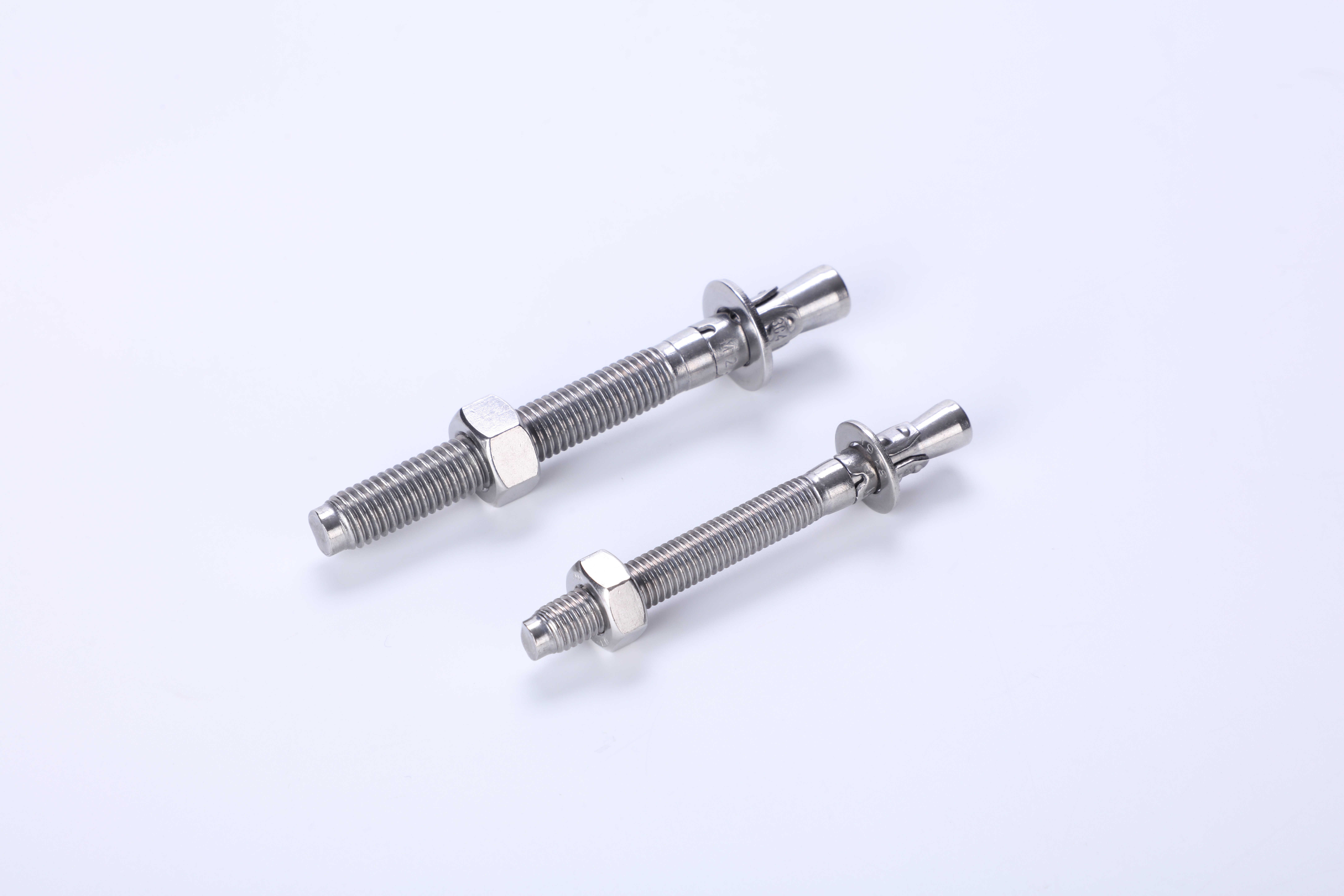
Understanding the internal anatomy helps you visualize the holding power. Every standard wedge anchor relies on four specific components:
Threaded stud: The main steel body transferring the load.
Expansion clip (wedge): The lower collar expanding against the concrete.
Nut: The top fastening element driving the torque.
Washer: The flat ring distributing surface pressure evenly.
The physics of expansion rely entirely on a "torque-controlled" mechanism. You insert the fastener into a pre-drilled hole. Tightening the nut pulls the cone-shaped lower end upward. This upward pull forces the expansion clip outward. The metal clip permanently wedges against the abrasive concrete hole walls. Friction locks the assembly in place.
Predictable holding values depend 100% on proper hole preparation. The drilled hole diameter must exactly match the anchor diameter. Oversized holes prevent the clip from biting into the walls. Furthermore, failing to clean out concrete dust acts like a lubricant, destroying the necessary friction.
Best Practice: Always use a carbide-tipped drill bit meeting ANSI standards. This ensures the hole diameter remains perfectly toleranced for the expansion clip.
Environmental matching determines the functional lifespan of any fastening system. Choosing an incorrect metal alloy leads to rapid oxidation, structural weakness, and eventual failure. Use this features-to-outcomes matrix to shortlist the right SKU.
Manufacturers coat carbon steel using a thin layer of zinc. This creates a basic barrier against atmospheric moisture.
Best for: Dry, indoor applications. Typical uses include HVAC mounting, indoor shelving, and interior wall framing.
Risk: Rapid corrosion occurs if exposed to continuous moisture, outdoor weather, or chemical agents.
Cost profile: This represents the most economical option available.
Hot-dipping submerses the steel in molten zinc. This process applies a much thicker, durable protective layer.
Best for: Moist outdoor environments or treated lumber applications.
Risk: The thicker zinc coating occasionally affects nut threading. Always ensure compatible, oversized HDG nuts pair correctly to prevent binding.
Stainless steel integrates chromium to resist oxidation internally rather than relying on a surface coating.
Best for: Submerged, coastal, or chemical-heavy environments. Grade 316 explicitly resists saltwater and high-chlorine exposure.
Risk: These carry the highest upfront cost. However, the investment prevents catastrophic structural failure caused by invisible rust creeping down the stud.
Material Type | Primary Application | Corrosion Resistance | Cost Level |
|---|---|---|---|
Zinc-Plated Steel | Indoor, completely dry areas | Low | Low |
Hot-Dipped Galvanized | Outdoors, treated lumber | Medium | Medium |
304 Stainless Steel | Wet environments, standard outdoor | High | High |
316 Stainless Steel | Saltwater, chemical plants | Maximum | Premium |
People often confuse various friction-based fasteners during the decision stage. Specifying the wrong anchor type ruins base materials and voids structural warranties. Let us compare these two common options.
Base material constraints dictate your initial choice. You must use a wedge anchor for solid concrete only. The immense expansion force shatters softer masonry. Sleeve anchors offer greater versatility. They distribute expansion forces over a wider area, accommodating brick, hollow block, and softer mortar joints safely.
Load capacities differ significantly. A standard wedge anchor provides substantially higher holding values in both shear and tension. Direct concrete-to-steel contact at the expansion clip creates unmatched friction. Sleeve anchors rely on a thin metal sleeve compressing between the stud and the wall, inherently reducing maximum load tolerance.
Hole sizing rules also diverge. Wedge anchors require a hole diameter identical to the anchor itself. A 1/2-inch stud requires a 1/2-inch hole. Conversely, sleeve anchors require a hole matching the outer sleeve diameter, not the inner threaded stud.
Use clear shortlisting logic. If the base material is suspect, hollow, unknown, or clearly masonry, abandon the wedge concept entirely. If the base consists of high-PSI solid concrete requiring permanent structural hold, always specify the wedge anchor.
Feature | Wedge Anchor | Sleeve Anchor |
|---|---|---|
Base Material | Solid concrete only | Concrete, brick, block, mortar |
Holding Strength | Extremely High (Structural) | Moderate to High |
Hole Diameter Rule | Matches anchor diameter exactly | Matches outer sleeve diameter |
Expansion Mechanism | Bottom clip expands outward | Full-length sleeve expands |
Engineers build trust through rigorous technical accuracy. Transparent assumptions regarding load distributions prevent onsite failures. Proper specification relies on three critical dimensions.
Embedment depth controls total pull-out resistance. Manufacturers list both minimum and standard embedment depths. Minimum embedment ensures the expansion clip engages securely beneath the concrete surface. Deeper embedment yields higher tension holding values. However, holding strength stops increasing once it surpasses the concrete's natural failure point. Past this point, the concrete cone will pull out before the steel snaps.
Edge distance and spacing dictate layout rules. Placing fasteners too close together creates overlapping stress cones inside the concrete. Placing them too close to an edge invites concrete spalling, where chunks of concrete break away under pressure. Industry standards use a strict rule of thumb. Maintain a distance of 5x the anchor diameter from any unsupported edge. Maintain a spacing of 10x the anchor diameter between adjacent fasteners.
Compliance and certifications establish legal safety baselines. Commercial projects frequently demand specific ICC-ES evaluation reports. Uncracked concrete approvals apply to standard foundations. Cracked concrete approvals represent a much stricter testing standard. These tests simulate micro-fissures opening and closing around the expansion clip. Seismic zone requirements mandate cracked concrete certifications. Using uncertified, generic anchors represents a massive liability in professional construction builds.
Real-world field experience reveals how frequently perfect specifications fail due to poor execution. Installation requires strict adherence to mechanical protocols.
The "bottomless hole" technique solves future removal issues. Once an expansion clip engages, the fastener cannot be extracted easily. Prying it out shatters the surrounding concrete. To mitigate this, drill the hole deeper than the overall anchor length. If you need to remove the fixture later, simply remove the nut and pound the remaining stud flush into the deep hole.
Torque control dictates long-term safety. Tightening the nut activates the expansion clip. Over-torquing strips the steel threads or spins the whole assembly inside the hole, destroying all friction. Under-torquing fails to fully expand the clip, allowing the fastener to slip under load. Always utilize a calibrated torque wrench. Reference the specific manufacturer torque specifications printed on the box.
Debris management directly impacts capacity. Drilling generates fine concrete dust. Leaving this dust inside the hole drastically reduces friction. The expansion clip slides against the powdery dust instead of biting into the solid concrete walls. Always use compressed air, a vacuum, or a wire brush to thoroughly clean the hole before insertion.
Common Installation Mistakes:
Using a worn-out drill bit, resulting in an undersized or warped hole.
Hammering the threads directly, causing damage and preventing nut installation. (Always thread the nut on flush before striking).
Ignoring concrete dust removal, reducing holding capacity by up to 50%.
Transitioning from specification to procurement involves rigorous supplier vetting. Delays in fastener delivery halt entire commercial job sites immediately.
Availability and inventory depth represent the foremost metrics. A good supplier stocks thousands of units across various diameters and lengths. You cannot afford to wait weeks for a specialized 316 stainless steel variant. Look for partners demonstrating deep, reliable inventory levels.
Traceability ensures project compliance. Reputable suppliers provide technical data sheets instantly upon request. They offer comprehensive load tables detailing shear and tension capacities based on concrete PSI. Furthermore, they supply material certifications confirming steel grades and zinc plating thicknesses. These documents satisfy strict building inspectors.
Evaluate bulk pricing structures carefully. Large commercial projects consume thousands of fasteners. Buying in bucket quantities or bulk pallets offers massive cost-efficiency compared to purchasing small consumer boxes. Negotiate bulk tiers upfront to optimize your procurement budget.
While a wedge anchor stands as the undeniable gold standard for solid concrete fastening, true performance relies on multiple precise variables. Success requires understanding the internal mechanics and respecting base material limitations.
Always match the steel material and coating precisely to the surrounding environmental conditions to prevent corrosion.
Respect embedment depths, edge distances, and spacing rules to maximize shear and tension capacities.
Enforce strict installation protocols, focusing on hole cleanliness and calibrated torque application.
Source compliant products featuring ICC-ES certifications for structural and seismic applications.
Take the next step in securing your project safely. View comprehensive technical load tables, browse the complete product catalog, or contact a specialized engineering team today for a project-specific recommendation tailored to your exact load requirements.
A: Generally, no. The expansion clip bites into the concrete permanently. Attempting to pull it out will severely damage the surrounding concrete. To eliminate the anchor, you must cut the stud off flush using an angle grinder. Alternatively, if you drilled a bottomless hole initially, you can pound the stud entirely into the concrete.
A: The drill bit diameter must precisely match the anchor diameter. For example, a 1/2-inch anchor strictly requires a 1/2-inch carbide-tipped drill bit. Always use bits conforming to ANSI standards to ensure the hole tolerances remain perfectly accurate.
A: No. The intense mechanical expansion force will instantly crack or blow out hollow, brittle, or soft masonry. Using them in brick ruins the structural integrity of the wall. Always use sleeve anchors, tapcons, or adhesive anchors for masonry applications.
A: Holding capacity depends entirely on the concrete's compressive strength (PSI), the specific embedment depth, and whether the load applies shear or tension forces. A 1/2-inch stud might hold several thousand pounds in 4000 PSI concrete. Always direct your calculations to the specific manufacturer load tables.
