 English
Author: Site Editor Publish Time: 2026-06-30 Origin: Site


You face a tough challenge when installing heavy-duty hardware near the edge of a slab. It is one of the most critical structural tasks in modern construction. If you install a concrete anchor too close to an edge, you risk concrete spalling, sudden blowout, and catastrophic load failure. Edge distance is not a single universal number. It depends heavily on the anchor diameter, the specific type of fastener used, and the load it needs to support. We wrote this guide to establish clear parameters for calculating safe edge distances. You will learn how to evaluate various anchor types for tight spaces and mitigate failure risks. We will also show you exactly how proximity to the edge reduces overall load capacity. By understanding these concepts, you can secure structural hardware safely and comply with strict engineering standards.
The Rule of Thumb: The absolute minimum edge distance is typically 5 times the anchor diameter, while 10 times the diameter is standard for achieving 100% load capacity.
Anchor Type Matters: A mechanical concrete wedge anchor requires greater edge distance than an adhesive/epoxy anchor due to the expansive forces exerted during installation.
Load Derating is Mandatory: Anchors installed closer than the standard minimum distance will suffer a significant reduction in allowable shear and tensile loads.
Compliance Verification: For structural applications, edge distance must align with ACI 318 standards and specific manufacturer ICC-ES evaluation reports.
Calculating the correct edge distance requires a basic understanding of engineering variables. You cannot guess these measurements. Two primary factors dictate spacing and edge requirements: anchor diameter (represented as d) and embedment depth. The diameter of the hardware establishes the baseline for all spacing formulas. A thicker bolt displaces more material and creates a wider stress cone inside the slab.
Industry standards rely heavily on multipliers of the anchor diameter. To achieve 100% of the published holding values, engineers use the standard edge distance formula of 10d. This means you multiply the anchor diameter by 10. If you use a 1/2-inch bolt, your standard edge distance is 5 inches. At this distance, the surrounding base material easily absorbs the stress of the installed hardware. You can apply maximum tension and shear forces without premature concrete failure.
Sometimes you cannot achieve the ideal 10d spacing. In these tight scenarios, we rely on the minimum edge distance formula of 5d. This represents the typical absolute minimum boundary. If you install hardware any closer than 5 times its diameter, the concrete substrate will likely fail during installation or under a working load. For a 1/2-inch bolt, the absolute minimum edge distance is 2.5 inches. However, placing hardware at this minimum distance means you must drastically reduce the allowable load.
Slab thickness also acts as a strict constraint. Edge distance rules assume the base material has adequate volume to contain the stress. You must evaluate the thickness of your concrete. Drilling a deep hole near an edge in a thin slab increases the risk of a blowout. The compressive forces push outward. If the bottom of the slab is too close to the embedment depth, the concrete simply breaks away. We recommend leaving an absolute minimum of two inches of solid concrete below the drilled hole.
Edge Distance Calculation Chart (Standard vs. Minimum) | ||
Anchor Diameter (d) | Standard Edge Distance (10d) - 100% Load | Minimum Edge Distance (5d) - Reduced Load |
|---|---|---|
1/4 inch | 2.5 inches | 1.25 inches |
3/8 inch | 3.75 inches | 1.875 inches |
1/2 inch | 5.0 inches | 2.5 inches |
5/8 inch | 6.25 inches | 3.125 inches |
3/4 inch | 7.5 inches | 3.75 inches |
When project constraints force a tight edge distance, the choice of fastening technology becomes your primary variable for success. You cannot treat all hardware equally. Different designs interact with the base material in vastly different ways. Understanding these mechanical behaviors helps you prevent structural failures in tight corners.
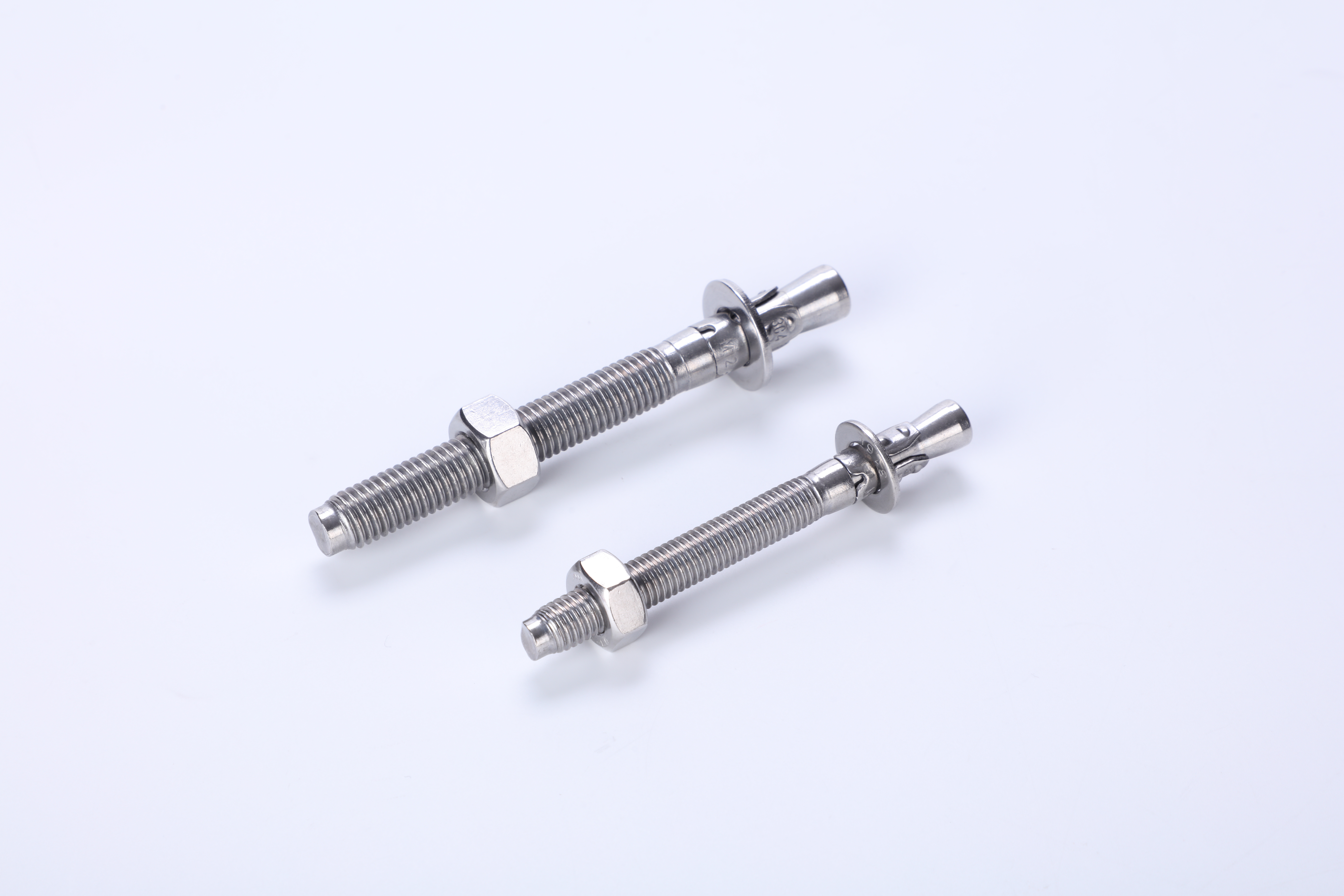
A concrete wedge anchor represents one of the most common heavy-duty fasteners in construction. Its mechanism relies on physical expansion against the concrete walls. As you tighten the nut, the threaded rod pulls a flared cone up through an expansion clip. This action wedges the clip forcefully into the sides of the drilled hole.
The main limitation of this technology is the extreme outward pressure it generates. These high expansion forces mean a wedge-style fastener requires the largest edge distances. If you place it too close to the boundary, the wedging action will simply split the concrete. We advise extreme caution when using expansion hardware near corners or thin edges.
Concrete screw anchors offer a distinct alternative to expansion hardware. Their mechanism cuts threads directly into the concrete substrate. As you drive the screw into the pilot hole, the hardened steel threads carve a path, locking the fastener mechanically into the base material.
The primary advantage of screw anchors is their lower expansion force. Because they cut threads rather than wedging material apart, they exert much less lateral stress. This characteristic allows for slightly closer edge placements compared to traditional expansion bolts. However, driving the screw still introduces mechanical stress. You remain limited by the sheer force required to cut into the masonry.
Adhesive anchors, often called chemical or epoxy anchors, use a fundamentally different approach. Their mechanism bonds a threaded rod to the concrete using a highly engineered epoxy resin. The chemical mixture hardens around the rod, bonding it directly to the walls of the drilled hole. This process completely eliminates outward wedging forces.
This zero-stress installation makes adhesive anchors the optimal choice for the tightest edge distances. They introduce no mechanical pressure into the base material. You can place them closer to edges than any other fastening technology. If you face an extremely tight clearance, epoxy is almost always the safest engineering choice.
Theoretical math looks clean on paper, but job sites present harsh realities. Installing hardware near a structural boundary introduces immediate physical risks. You must anticipate these dangers before you start drilling.
Installation blowout is a frequent and destructive problem. This occurs when the concrete edge fractures or "blows out" while you torque a mechanical fastener to its specification. As the expansion clip flares outward, it finds the path of least resistance. If the edge is too close, the concrete simply blows away in a large chunk. This ruins the mounting point instantly. You cannot repair a blown-out edge to structural standards. You must abandon the hole and relocate your hardware.
Concrete spalling under load represents a more insidious risk. Even if your installation succeeds without a blowout, the connection remains vulnerable. Shear loads directed toward the nearby edge place massive stress on a small volume of material. Over time, this stress can cause a cone-shaped concrete failure. Engineers refer to this limit as the concrete breakout strength. A heavy shear force can rip a conical chunk of concrete right off the side of the slab, causing the attached structure to collapse.
We also must account for vibration and drilling damage. Aggressive hammer drilling near an edge physically punishes the base material. The repeated impacts of the carbide bit create micro-fractures deep inside the masonry. These tiny cracks weaken the mounting point before you even insert the hardware. When you operate a heavy rotary hammer near a delicate edge, you compromise the structural integrity of the surrounding zone.
Hairline cracks: Inspect the edge before drilling. Existing cracks mean the concrete is already compromised.
Dust discoloration: If the drilling dust changes color rapidly, you might be hitting embedded debris or weakened material near the surface.
Sudden drill plunge: If the drill bit suddenly pushes forward without resistance near an edge, you have likely blown out the side of the concrete invisibly below the surface.
When project limitations force you to work within the 5d to 10d margin, you cannot rely on maximum load ratings. You must evaluate the connection using specific reduction formulas. This process is known as derating. It calculates safety parameters when edge distance is compromised.
You must understand the difference between tensile and shear reduction. Tensile loads pull straight out of the hole. Shear loads push sideways across the hole. Shear loads directed towards the edge suffer the most severe capacity reductions. The concrete between the hardware and the open air provides the only resistance. As that distance shrinks, the shear capacity drops exponentially. Tensile capacity also decreases near an edge, but shear failure is almost always the limiting factor in tight placements.
To calculate exact safe loads, you must use manufacturer ICC-ES Evaluation Reports. These documents contain the official load reduction multipliers or derating charts. You locate the table for your specific hardware, find the row for your actual edge distance, and identify the reduction multiplier. If the chart shows a 0.65 multiplier for shear load at a 3-inch edge distance, you multiply the standard maximum load by 0.65. This gives you the new, reduced safe working load.
We must emphasize a critical trust and transparency note here. General rules of thumb do not supersede structural engineering calculations for critical loads. Standards like ACI 318 govern structural concrete design. If you secure a heavy steel column, a safety harness point, or a balcony ledger board, you must consult a licensed structural engineer. Never guess the derating factor on a life-safety application.
Example Shear Load Derating Multipliers (Hypothetical 1/2" Anchor) | ||
Edge Distance | Condition | Shear Load Multiplier |
|---|---|---|
5.0 inches (10d) | Optimal Spacing | 1.00 (100% Capacity) |
3.75 inches | Reduced Spacing | 0.82 (82% Capacity) |
2.5 inches (5d) | Minimum Spacing | 0.60 (60% Capacity) |
< 2.5 inches | Non-Compliant | NOT RECOMMENDED |
Successful installation near a boundary requires precision. You cannot rush the process. A single mistake will ruin the mounting location. We have compiled field-tested best practices to ensure safe, reliable placements.
First, you must map the rebar. We strongly recommend using a Ground Penetrating Radar (GPR) unit or an advanced rebar scanner. Hitting steel reinforcement near an edge drastically complicates the installation. If the drill bit catches on rebar, it violently jerks the tool and shatters the surrounding concrete. This immediately compromises the structural integrity of the edge. Locate the steel first, then mark your drill points to avoid it.
Your drilling technique dictates the survival of the concrete edge. Do not start with a massive drill bit. We recommend starting with a smaller pilot hole. This reduces the initial impact energy. When you step up to the final diameter, consider turning off the hammer function on your rotary hammer for the last inch of depth. Drilling in rotation-only mode takes longer, but it eliminates the aggressive impacts that cause micro-fractures near delicate boundaries.
Finally, torque control is non-negotiable. You must use a calibrated torque wrench to set mechanical hardware. Never use an impact driver near an edge. Impact drivers deliver violent, uncontrollable rotational strikes. They easily over-torque the nut and split the concrete instantly. A calibrated torque wrench allows you to apply smooth, gradual pressure until you reach the exact foot-pounds specified by the manufacturer.
Ignoring dust removal: Failing to blow and brush the dust out of the hole reduces holding power and increases wedging pressure unexpectedly.
Over-tightening: Adding "one more turn" for good measure often causes an immediate edge blowout.
Ignoring ambient temperature: When using epoxy near an edge, low temperatures drastically alter curing times. Applying load too early will pull the epoxy right out of the hole.
Safe edge distance is a precise calculation of diameter, anchor type, and acceptable load reduction. You cannot rely on guesswork when structural integrity is at stake. The fundamental 5d and 10d rules provide an excellent starting framework. However, the unique variables of your job site ultimately determine how close to the boundary you can operate.
Moving forward, always select your fastening technology based on your actual edge constraints. Default to adhesive epoxy solutions if extreme edge proximity is unavoidable. Before you drill, review the specific manufacturer's technical data sheet to confirm the derating factors. Finally, invest in proper rebar scanning and use calibrated torque tools. By following these steps, you protect the concrete, secure your hardware safely, and prevent catastrophic failures.
A: The absolute minimum edge distance is typically 2.5 inches. This follows the standard 5d rule (5 times the 1/2-inch diameter). However, placing it this close requires significant load derating. To achieve full structural load capacity, you generally need a 5-inch edge distance (10d). Always check the specific manufacturer documentation.
A: Yes. Cracked concrete assumes the base material already contains micro-fractures and tension zones. This weaker state requires larger edge distances to safely hold a load. You must use specialized hardware explicitly tested and approved for cracked concrete applications. Standard edge formulas often increase significantly in these environments.
A: You can use high-strength epoxy or patching compounds for cosmetic repairs, but a patched edge cannot support structural loads. The chemical bond of the patch will fail under shear or tensile stress. If an edge blows out during installation, you must relocate the mounting point further inward.
