 English
Author: Site Editor Publish Time: 2026-06-29 Origin: Site


Fastener failure in structural engineering carries immense, unforgiving stakes. When an attachment point fails under load, the consequences multiply rapidly. Improper anchor selection frequently leads to structural liability. It triggers failed safety inspections. It leaves load-bearing integrity heavily compromised. Concrete acts as an inherently unique building material. It performs exceptionally well under intense compression forces. However, it remains remarkably weak under direct tension. Fasteners bridge this highly dangerous gap. They effectively transfer heavy load forces from an external attachment deep into the solid concrete substrate. We will transition from generic fastening advice to a strict technical evaluation framework. You will discover exactly how understanding physical mechanisms dictates your procurement decisions. Mastering a concrete anchor ensures safe, compliant construction. We will explore critical base material conditions and practical installation realities.
Concrete anchors secure loads using one of three primary mechanical principles: expansion (friction), undercutting (interlocking), or chemical bonding.
A concrete wedge anchor provides maximum holding power for static, heavy-duty loads via torque-controlled friction.
Selecting the correct anchor requires evaluating the base material condition—specifically, verifying if the concrete is classified as cracked or uncracked.
Installation precision (hole diameter, dust removal, torque specs) is equally as critical as the physical anchor mechanism; failure is rarely a product defect, but an installation error.
Choosing the right fastener requires deep understanding. You must know how it physically interacts with the base material under extreme stress. Buying fasteners based on size alone introduces massive compliance risks. Engineers and contractors must match the specific physics of the anchor to the structural demand. Every successful application relies on one of three distinct mechanical principles. You cannot guess these mechanisms in the field. You must specify them deliberately.
This method relies purely on outward physical force. The fastener expands violently against the inner walls. You drill the specific hole. You insert the fastener. As you drive or tighten the bolt, an internal mechanism deploys. It wedges securely into the surrounding concrete base. This action creates immense friction. The friction holds massive loads securely. It resists direct pull-out forces aggressively. Mechanical expansion handles heavy static weight beautifully. You see this application everywhere. Contractors use them for steel base plates. They use them for heavy machinery mounts. The friction holds the structural connection tight for decades.
This technique utilizes physical barriers. It avoids relying on pure friction alone. The anchor creates a mechanical block deep inside the substrate. Consider aggressive concrete screws. They cut their own hardened threads directly into the masonry wall. The concrete material physically locks between the metal threads. Consider undercut anchors next. These fasteners expand into a specially pre-drilled bell-shaped cavity. You drill this cavity at the very base of the hole. The anchor opens up inside this bell. It locks perfectly into place. The fastener cannot pull out unless it destroys the surrounding concrete base. It provides exceptional holding power.
Chemical anchors utilize a high-strength two-part epoxy or resin. The installer injects this adhesive into a clean hole. They do this before inserting the threaded rod. The chemical bonds the entire embedded length securely to the concrete. This distributes the heavy load over a significantly larger surface area. Crucially, it does so without inducing outward expansion stress. Mechanical mechanisms apply outward pressure. Chemical mechanisms do not. You use chemical bonding for extremely fragile base materials. It works exceptionally well in hollow block. It also handles severe dynamic vibration perfectly.
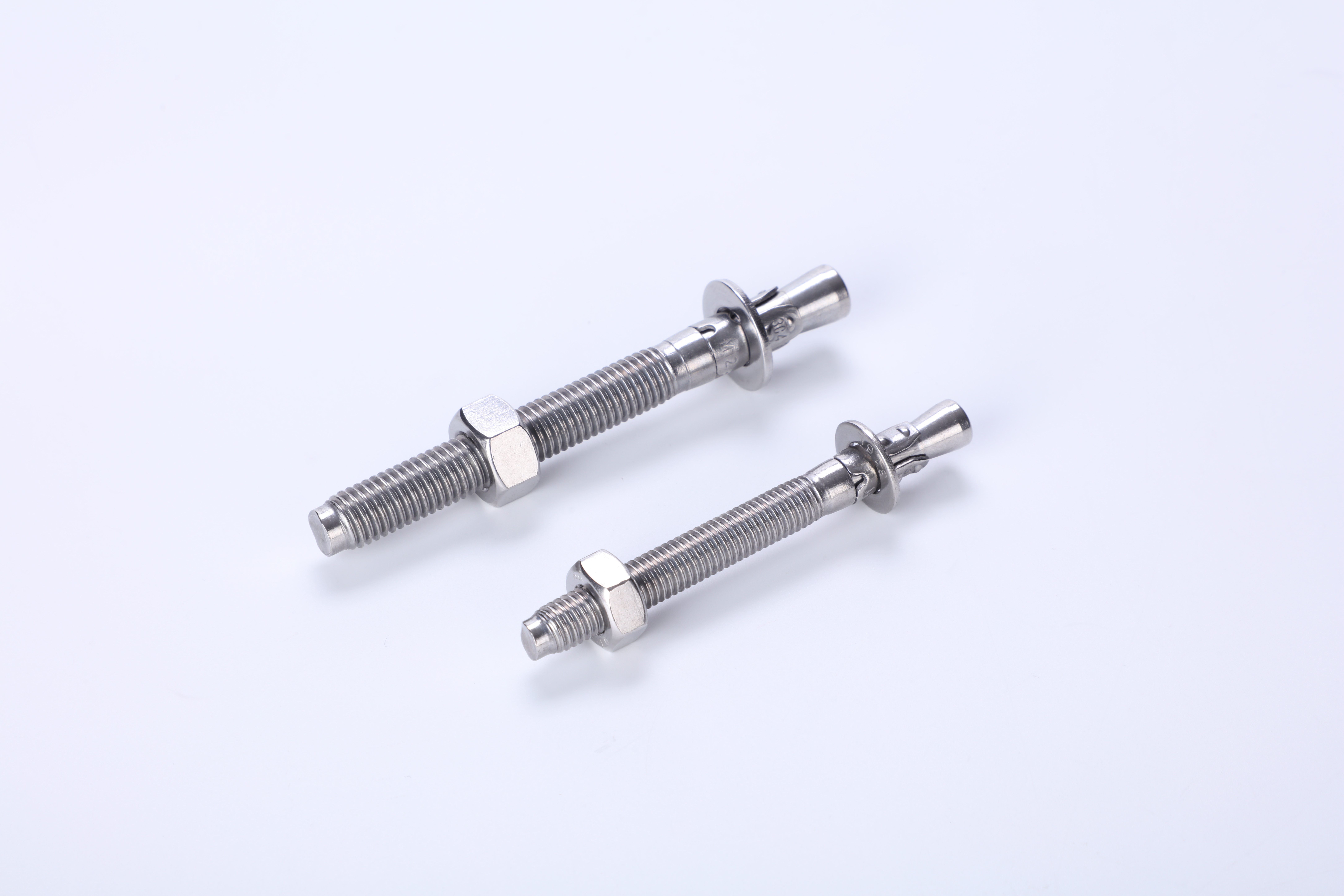
Let us break down the exact tightening sequence. First, you drill the hole. You clean it thoroughly. You tap the fastener into place. As you torque the hex nut, the anchor body pulls upward. This vertical movement forces the bottom expansion clip outward. The clip bites aggressively against the rigid concrete wall. A concrete wedge anchor requires precise wrench control to achieve this proper bite.
This mechanism handles two primary force types. First, it manages tension. We call this pull-out force. The expanded stainless steel clip resists tension directly. The harder the load pulls, the tighter the clip wedges itself into the concrete. Second, it handles shear force. Shear applies downward or side-to-side stress across the joint. The solid steel diameter of the anchor body itself resists this shearing action. You rely on the sheer mass of the metal pin to prevent snapping under lateral loads.
You will find this specific mechanism ideal for heavy-duty applications. It manages static loads exceptionally well. It performs best in solid, uncracked concrete slabs. We frequently specify them for structural steel columns. We use them for massive industrial racking systems. We also mandate them for heavy factory machinery anchoring. They offer unmatched reliability when you follow proper installation torques.
The physical state of the concrete absolutely dictates the anchor's working mechanism. Base materials behave differently under structural load. You must evaluate the concrete condition before specifying any fastener. Concrete acts dynamically. It changes over time. Structural engineers categorize it strictly into two zones. Understanding these zones prevents catastrophic field failures.
Standard expansion anchors operate incredibly reliably here. This environment assumes the base material remains perfectly solid. It will not experience severe tensile stresses. Such stresses would otherwise cause microscopic fissures during the anchor's entire lifespan. The constant friction holds strong without any sudden interruption. The hole dimensions remain strictly stable. Engineers typically assume uncracked conditions for continuous internal floor slabs. They also assume it for massively thick foundational footings holding static weight.
Seismic zones present unique and terrifying challenges. Concrete often develops micro-cracks under severe load. It shifts slightly during settling or minor tremors. Standard friction anchors rapidly lose holding values. They fail if a crack propagates directly through the drill hole. The hole literally widens. The critical friction suddenly disappears. The bolt slips out smoothly. Therefore, you need specific heavy-duty anchors. They must dynamically re-expand to fill the newly widening gap. Alternatively, you must use chemical adhesives. These adhesives must be heavily engineered for strict IBC/IRC seismic compliance.
We need a reliable matrix to match the mechanical principle to your exact project parameters. Fastener selection is never a guessing game. You must evaluate load types. You must evaluate base materials. You must understand edge distance constraints. The table below illustrates the primary evaluation dimensions we use daily.
Anchor Category | Primary Mechanism | Best Application Environment | Major Limitation or Risk |
|---|---|---|---|
Wedge Anchor | Friction / Expansion | Heavy static loads, uncracked solid concrete, structural steel plates. | Cannot be used near unsupported edges; causes massive expansion stress. |
Concrete Screw | Interlock / Threading | Close-to-edge installs, temporary fixtures, light to medium loads. | Struggles under severe shear forces; thread wear in weak masonry. |
Chemical Epoxy | Chemical Bonding | Vibratory loads, hollow block, extremely tight edge distances. | Requires immaculate hole cleaning; long cure times delay work. |
Specify these fasteners for strictly permanent installations. You must use them in solid concrete only. They handle high shear and tension requirements exceptionally well. They also offer incredibly fast installation. You completely bypass frustrating cure times. You drill, drive, torque, and load immediately. This saves massive amounts of labor time on large commercial projects.
Choose heavy-duty screws for medium-to-light load demands. They shine brightly in close-to-edge installations. They create zero expansion stress inside the hole. They are perfect for situations demanding future removability. You also use them for temporary fastening needs. Contractors love them for attaching wooden sill plates. They perform reliably in both concrete and dense masonry brick.
Select chemical bonding for intense vibratory loads. Heavy machinery creates relentless micro-vibrations. Epoxies absorb this dynamic stress beautifully. They also excel in hollow masonry block structures. Finally, use them when edge distances are extremely tight. Mechanical expansion would simply crack the fragile concrete in these sensitive spots. Epoxies gently glue the rod into place without expanding.
Practical field considerations routinely compromise a fastener's working mechanism. Installation precision matters tremendously. Failure rarely stems from a raw manufacturing product defect. It almost always traces back directly to an avoidable installation error. Let us examine the most common field mistakes. You must guard against these risks aggressively.
Drill dust is extremely dangerous. Leftover silica dust acts as a surprisingly effective lubricant. It completely neutralizes the critical friction required for expansion anchors. It also actively blocks the chemical bonding of epoxies. The epoxy glues itself to the dust, not the solid concrete wall. You must brush and blow out every single hole thoroughly. We recommend strict hole cleaning protocols.
Use a specialized wire brush sized specifically for the hole diameter.
Use compressed air or a hand pump to blow out the loosened debris.
Repeat the brushing and blowing sequence at least twice.
Visually inspect the hole interior before inserting any fastener.
Wrench control is another critical reality. Over-torquing instantly shears the bolt. It can also fatally crack the surrounding concrete base. Conversely, under-torquing prevents the internal expansion mechanism from fully engaging. The clip never bites. The bolt pulls out under minimal load. Always use a freshly calibrated torque wrench. Follow the specific manufacturer specifications strictly.
You must understand the complex "cone of failure" physics. When concrete fails under tension, it breaks away in a distinct cone shape. It breaks around the fastener itself. If you place a fastener too close to an unsupported edge, disaster strikes. The concrete will spall immediately. It blows out long before the steel anchor itself fails. The same applies if you ignore minimum embedment depths. Let us look at a few mandatory installation rules.
Verify the strict minimum edge distance requirement before drilling.
Confirm the exact minimum embedment depth needed for your specified load.
Never guess the torque value in the field using an impact driver.
Always clean the hole meticulously to ensure maximum mechanical grip.
The ultimate holding power of any concrete fastener remains a direct result of its physical mechanism. These mechanisms always rely on friction, mechanical interlock, or a strong chemical bond. You must match the mechanism precisely to the concrete condition. Understanding this fundamental physics ensures significantly safer structural builds. You avoid catastrophic liability.
We strongly advise specifiers and contractors to cross-reference their exact load requirements. Compare your specific shear and tension needs against official ICC-ES evaluation reports. Always consult comprehensive technical data sheets before finalizing your procurement. Never assume all heavy-duty anchors perform equally. Train your installation crews rigorously on hole cleaning and torque control protocols. Precision dictates safety.
A: A standard bolt requires a nut and a tapped hole. It often requires access to the back of the material. A concrete fastener features a unique expansion or thread-cutting mechanism. It secures itself firmly into a blind, pre-drilled hole. You never need access to the opposite side of the wall or slab.
A: No, you generally cannot remove them intact. The underlying expansion mechanism is strictly permanent. Once the metal clip bites deep into the concrete, it locks extremely tight. To resolve this, you typically must cut the exposed threaded stud off flush using an angle grinder. Alternatively, you can drive it deeper into the hole.
A: Pull-outs happen for a few very common reasons. Installers often use an improper drill bit size, creating a dangerously loose hole. Inadequate hole cleaning leaves silica dust that completely ruins friction. Finally, installing into weak, crumbling, or unrated concrete strength allows the base material itself to fail under load.
A: Edge distance depends entirely on the specific fastener diameter and mechanical type. Manufacturers publish strict minimum edge distances in their technical data. Placing an expansion bolt too close creates massive internal stress. This stress forces a structural blowout. Always check the official technical data sheet for exact spacing measurements before drilling.
