 English
Author: Site Editor Publish Time: 2026-06-28 Origin: Site


Hanging a heavy mirror or mounting a new shelf should feel rewarding. You want a secure fixture. You also want peace of mind. Sometimes, you look inside your toolbox. You find a leftover fastener. You wonder if it will work. Avoiding another trip to the hardware store sounds great. However, using a masonry fastener in standard drywall is highly unadvisable. It creates a mechanically unsound hold.
Fastener safety depends entirely on matching the hardware to the wall. You must align the expansion mechanics of the plug to the density of your base material. A mismatch almost always causes instant failure. In this evaluation guide, we break down why masonry hardware destroys soft walls. You will learn the engineering reality behind these robust mechanisms. We will also show you the right alternatives to secure your heavy items safely.
Incompatible Mechanics: Concrete anchors require solid, high-density materials to generate friction; drywall (gypsum) simply crumbles under this pressure.
Load Failure: A concrete anchor in drywall has near-zero shear or tensile load capacity, risking immediate fixture failure.
The Right Tool: Drywall requires anchors that clamp behind the wall (toggles) or feature wide, aggressive threads (self-drilling) to distribute weight.
Safety First: Using the wrong anchor voids hardware load ratings and can lead to property damage or injury.
You must understand basic fastener mechanics to ensure a safe installation. Heavy-duty fasteners operate on the principle of outward expansion. You drill a hole. You insert the plug or bolt. You then drive a screw or turn a nut. This action forces the hardware sleeve to flare outward. The metal or thick plastic bites aggressively into the surrounding hole.
This expansion mechanism strictly requires a rigid, unyielding base material. Poured foundation walls, solid brickwork, and cinder blocks provide this required resistance. The surrounding material pushes back against the expanding sleeve. This opposing force creates massive friction. This friction gives the fastener its immense holding power. It holds hundreds of pounds securely.
A prime example of this extreme expansion is the concrete wedge anchor. This heavy-duty fastener represents the ultimate form of friction-based holding. It features a threaded bolt with a small wedge mechanism at the base. You torque the nut on the outside. This turning action pulls the wedge up into a metal expansion clip. The clip flares outward with immense pressure.
You can instantly see why this fails in a soft wall. The outward pressure requires a rock-hard boundary. If you install this heavy-duty hardware in a hollow, soft panel, the wedge simply crushes the surrounding material. It never finds the resistance it needs to lock into place.
Always match the drill bit size exactly to the manufacturer specifications.
Blow out all dust from the drilled hole before inserting the hardware.
Use a torque wrench to set wedge-style fasteners to the correct specification.
Never install these expansion fasteners near the unsupported edge of a concrete slab.
We need to look closely at what makes up standard interior walls. Drywall consists primarily of compressed gypsum dust. Manufacturers encase this powdery core in thick paper backing. Gypsum offers excellent fire resistance. It provides a smooth surface for painting. It does not, however, offer structural rigidity.
When an expansion fastener flares open inside gypsum, a crushing effect occurs. The outward pressure exceeds the compressive strength of the gypsum. The material cannot push back. Instead, it pulverizes. The once-snug drilled hole turns into a loose, dusty cavity. The fastener spins freely. It fails to grip anything solid.
Standard interior walls are hollow behind the panel. Masonry fasteners require solid-depth embedment. They need material wrapping entirely around their embedded length. You cannot achieve this in a hollow cavity. If you drive a standard concrete anchor into a half-inch panel, most of the expansion sleeve pushes into empty space. It has nothing to grab.
Assuming plaster over lath behaves exactly like modern drywall panels.
Failing to check wall depth before choosing a fastener length.
Using a hammer to forcefully drive plastic masonry plugs into soft gypsum.
Ignoring the powdery white dust during drilling, which clearly indicates a soft base material.
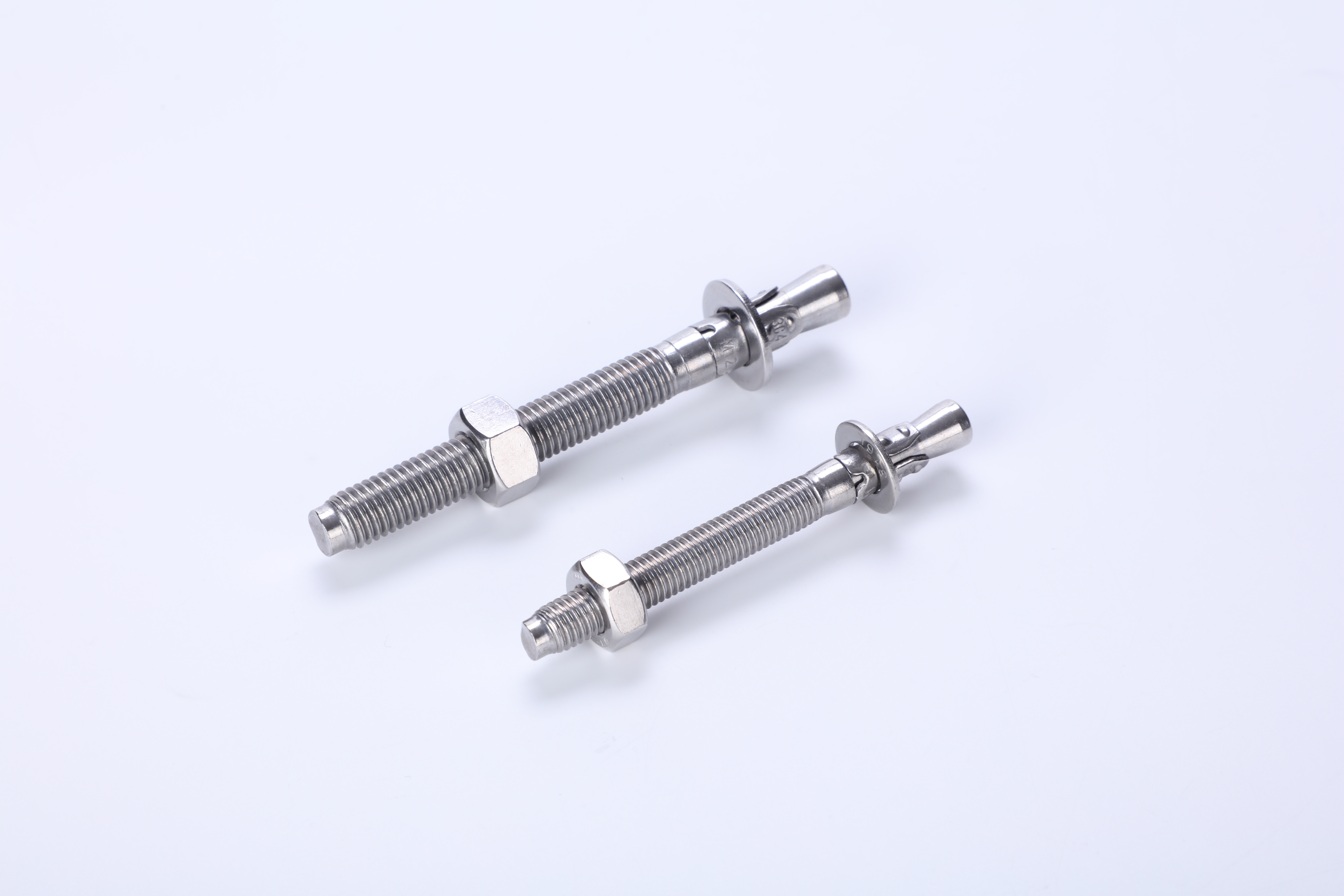
Many homeowners fall victim to the "friction fit" illusion. You might push a masonry plug into a gypsum wall. You drive the screw in. It feels surprisingly snug at first. You hang a small frame. Everything seems fine. This creates a false sense of security. The plug holds only by the slightest surface tension.
This setup fails instantly under dynamic loads. A dynamic load includes any shifting weight or vibration. You open and close a nearby door. The wall vibrates. The heavy footsteps upstairs shake the ceiling. These tiny movements cause the metal or plastic to grind against the soft gypsum. The hole slowly widens. Gravity eventually wins.
The outcome of this failure involves significant property damage. The loose fastener tears large chunks of drywall out of the wall. Expensive electronics crash to the floor. Televisions shatter. Heavy floating shelves collapse. You face destroyed property. You also risk serious injury to children or pets standing below the falling fixture.
We must clarify one specific exception. You might drill through a standard interior panel directly into a structural block wall. This happens often in basement finishing. Builders attach furring strips to the block wall. They mount the interior panel to these strips. In this exact scenario, you can use masonry hardware. However, the fastener must be long enough. It must pass completely through the hollow gap. It must embed deeply into the solid block behind it.
You must abandon expansion-based mechanics when dealing with hollow walls. You need a different holding strategy entirely. You should evaluate your needs based on load requirements and force type. Shear force pulls straight down along the wall. Tensile force pulls straight out away from the wall. Heavy items like televisions exert both forces.
Anchor Type | Best Base Material | Holding Mechanism | Weight Capacity (Varies) |
|---|---|---|---|
Plastic Expansion Plug | Solid Brick / Block | Outward Friction | Light (Under 15 lbs) |
Self-Drilling (Zip-It) | Drywall | Wide Thread Displacement | Medium (15 - 30 lbs) |
Molly Bolt | Drywall / Hollow Door | Rear Clamping Compression | Medium (25 - 50 lbs) |
Strap Toggle Bolt | Drywall / Plaster | Rear Surface Distribution | Heavy (50+ lbs) |
You have safe options for lightweight items like small picture frames or thermostats. Standard plastic expansion plugs rarely work well here. Instead, look for flanged plastic anchors specifically designed for soft walls. The flange prevents the plug from pushing through the surface.
Self-drilling threaded fasteners offer an excellent upgrade. Many people call these Zip-Its. They feature massive, wide plastic or metal threads. You drive them directly into the wall with a screwdriver. The wide threads displace a large volume of gypsum. They distribute the load across a wider area. They resist downward shear force very well.
Heavier fixtures demand mechanical clamping. Molly bolts provide a great solution. They feature an expanding metal sleeve. You push the bolt through the hole. You tighten the screw. The metal sleeve collapses behind the wall. It forms a tight star shape. This clamps the gypsum firmly between the front flange and the rear star.
Toggle bolts represent the highest load-bearing option for hollow walls. They abandon friction entirely. A spring-loaded set of metal wings pushes through the hole. The wings snap open in the hollow cavity. You tighten the bolt. The wings pull tight against the back side of the panel. Strap toggles make this even easier. They use plastic straps to hold a solid metal channel flat against the back of the wall. This distributes heavy weight across a massive surface area.
Assess the Weight: Weigh your fixture accurately. Always round up to ensure safety margins.
Identify the Wall: Tap the wall. A hollow sound confirms standard interior framing. A solid thud suggests masonry directly behind the surface.
Determine the Force: Will the item pull away from the wall (like a TV on an articulating arm)? If so, you need toggle bolts.
Locate the Studs: Always try to find a wooden or metal stud first. Mounting directly into structural framing eliminates the need for hollow-wall hardware entirely.
Substituting hardware across fundamentally different base materials guarantees failure. The physics simply do not align. A solid base requires outward expansion. A hollow base requires rear clamping or wide thread distribution. Forcing a rigid mechanism into soft gypsum ruins your wall. It drops your expensive fixtures to the floor.
Take these action steps before starting your next project:
Assess your fixture's total loaded weight before buying hardware.
Confirm your wall type by knocking or using an electronic stud finder.
Procure the correct hollow-wall clamping hardware for standard interior panels.
Discard or store leftover masonry fasteners separately to avoid future confusion.
Always locate and utilize structural wall studs for maximum safety.
A: Remove the fixture immediately to prevent damage. Extract the anchor carefully using pliers. Do not yank it out aggressively. Patch the damaged hole with spackle and sand it smooth. Drill a new hole a few inches away. Use a proper toggle bolt or find a wall stud.
A: Basic conical plastic anchors are often marketed as universal. However, they are strictly for very light-duty loads in hollow walls. They behave fundamentally differently in solid masonry versus hollow panels. They expand well in solid block but offer little reliability in soft gypsum.
A: No. Tapcons are specialty masonry screws. They require a rigid, dense material to cut threads into. If you drive a Tapcon into standard interior gypsum, it will simply ream out the hole. It will strip immediately. It provides zero holding power in soft panels.
