 English
Author: Site Editor Publish Time: 2026-06-15 Origin: Site


Masonry fastening carries immense responsibility. You rely on these connections to hold heavy structural elements securely in place. Choosing the wrong fastener often leads to catastrophic structural failure. It can crack your base materials. It can also cause dangerous accidents or demand costly rework. Professionals frequently confuse wedge and sleeve expansion fasteners. Both look like heavy-duty hardware. However, their internal mechanics dictate entirely different use cases. You cannot simply swap one for the other.
The "better" option depends entirely on your specific project conditions. It relies on base material composition. It relies on your load requirements. It also depends heavily on edge proximity. In this article, you will learn exactly how to evaluate these critical factors. We will break down the engineering mechanics behind each option. You will discover practical scenarios to guide your final decision safely and effectively.
Wedge anchors offer superior holding power but are strictly limited to solid concrete.
Sleeve anchors are highly versatile and are the safest choice for brick, hollow block, and mortar.
Wedge types create extreme, localized outward pressure, posing a high risk of concrete blowout if installed too close to an edge.
Sleeve types distribute expansion force over a larger surface area, making them more forgiving in inconsistent or aging masonry.
To choose the right structural fastener, you must first understand how they grip the base material. Both options rely on mechanical expansion. They convert turning force into outward radial pressure. However, they distribute this pressure in fundamentally different ways.
This fastener relies on extreme, localized expansion. It features a threaded stud with a tapered bottom section. A small metallic expansion clip wraps around this tapered cone. When you strike the fastener into a drilled hole, the clip compresses. Once you tighten the top nut, the stud pulls upward. This action forces the tapered cone into the small clip. The clip expands aggressively. It bites deeply into a highly concentrated area of the concrete wall.
Because the expansion happens in one tiny zone, the outward force is immense. This localized friction gives the wedge anchor incredible holding power. However, it also demands a flawless, solid base material to absorb that extreme stress.
This fastener relies on distributed expansion. It features a threaded bolt pulling a cone-shaped plug into a full-length, hollow metal tube. We call this tube the sleeve. When you tighten the bolt or nut, the plug travels upward inside the sleeve. This action causes the metal tube to flare outward along its entire embedded length.
Instead of biting into a single millimeter of material, the sleeve presses gently against the entire wall of the drilled hole. The expansion is softer. It spans a much wider surface area.
The mechanical differences directly dictate real-world performance. You must weigh the concentrated, high-friction grip of the wedge against the broader, softer grip of the sleeve.
Friction intensity: The wedge design creates extreme point-pressure. The sleeve design spreads the load safely over a larger area.
Material stress: The wedge demands rigid, flawless concrete to resist cracking. The sleeve accommodates softer or slightly irregular materials.
Torque response: The wedge reaches its holding capacity quickly under high torque. The sleeve compresses gradually, offering tactile feedback during installation.
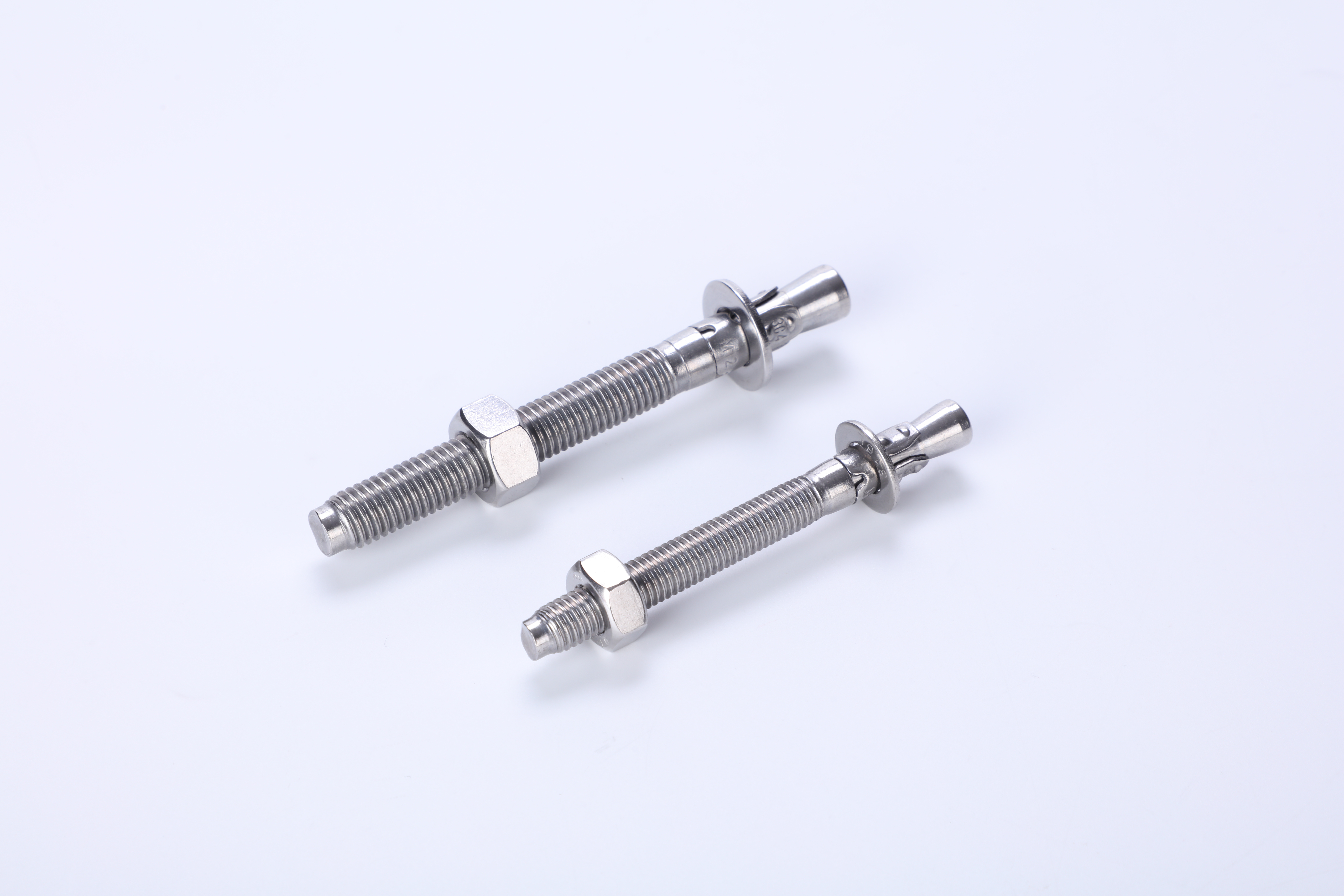
You must never select a masonry fastener based on load ratings alone. The structural integrity of your base material dictates everything. Matching the fastener to the substrate prevents critical failures.
These fasteners are exclusively for solid, uncracked concrete. You should never use them in any other substrate. Solid poured concrete possesses the compressive strength necessary to handle extreme localized pressure. When the expansion clip flares out, the concrete matrix holds firm. This creates an unbreakable mechanical bond. Use them for concrete slabs, structural footings, and solid poured walls.
Using a wedge style in brick or hollow block represents a critical engineering failure. These materials lack the compressive strength of solid concrete. Brick is highly brittle. Hollow concrete masonry units (CMU) feature thin outer webs and empty inner cavities.
If you install a wedge type into a brick, the intense point-pressure will shatter the masonry. The brick will split entirely. If you install it into a hollow block, the expansion clip will simply punch through the thin outer wall. It will fall into the hollow cavity. You will achieve zero holding power. The fixture will fail instantly under load.
You should embrace the sleeve design for its incredible versatility. Because the expansion force distributes across a larger surface area, the risk of shattering brittle materials drops significantly. They are highly effective in solid concrete, hollow concrete block, brick, and even robust mortar joints. The long sleeve bridges gaps and provides reliable friction across irregular surfaces.
Contractors often face walls covered in heavy stucco, thick plaster, or drywall. You cannot always see the underlying masonry structure. You might drill into a solid block, or you might hit a hollow void. If the internal structure remains unknown, sleeve anchors mitigate major risks. They handle both solid and hollow conditions safely. If you accidentally hit a hollow cavity, the long sleeve still grabs the outer wall thickness.
Here is a quick reference table for base material compatibility:
Base Material | Wedge Suitability | Sleeve Suitability | Key Structural Reason |
|---|---|---|---|
Solid Poured Concrete | Excellent | Good | Concrete withstands localized extreme pressure perfectly. |
Hollow Concrete Block (CMU) | Dangerous / Fails | Excellent | Sleeve spreads pressure across the thin outer web. |
Solid Brick | Dangerous / Fails | Excellent | Brick shatters under wedge point-pressure. |
Mortar Joints | Dangerous / Fails | Good | Mortar crumbles under extreme concentrated stress. |
Engineers evaluate structural connections based on tension and shear. Tension refers to pull-out strength. Shear refers to downward or perpendicular force. Understanding these capacities ensures a safe, long-lasting installation.
Wedge options consistently yield higher tension and shear load values in solid concrete. Their aggressive bite creates a permanent mechanical interlock. When extreme pull-out force applies to the fixture, the tapered cone actually pulls deeper into the clip. This action wedges the fastener even tighter against the concrete walls. For maximum ultimate pull-out strength in solid slabs, this design remains unmatched.
Industry standards classify sleeve options as medium-to-heavy duty. They securely hold moderate loads like handrails or signage. However, they lack the extreme gripping force required for massive structural weights. Conversely, industry professionals classify wedge options as strictly heavy-duty structural fasteners. You trust them to hold massive steel columns, industrial racking, and primary load-bearing sill plates.
You must consider vibration. Mechanical expansion fasteners excel at holding static structural loads. A static load remains constant, like a steel beam or heavy machinery sitting still. However, dynamic loads present challenges. Heavy vibrations can slowly pulverize the concrete directly surrounding an expansion clip. Over time, the hole widens slightly. The fastener loses grip.
Neither mechanical option is ideal for extreme high-vibration environments. In those specific cases, chemical or epoxy anchors usually win. However, for standard static structural loads, wedge types hold significantly better than sleeve designs.
Theoretical strength matters little if you execute the installation poorly. Field conditions often dictate your success. Drill bit wear, edge proximity, and future removability play crucial roles in your daily workflow.
Every mechanical fastener requires a drilled hole. The precision of this hole determines the ultimate holding power.
Wedge designs require precise hole diameters. The drill bit size must exactly match the anchor size. If you use a 1/2-inch fastener, you must use a 1/2-inch bit. Furthermore, you must clean the hole perfectly. Any residual concrete dust acts like a lubricant. It prevents the clip from biting into the wall. Masonry bits wear down over time. A worn bit drills a slightly undersized hole. You will struggle to hammer a wedge fastener into an undersized hole without damaging the threads.
Sleeve designs offer more forgiveness. They tolerate minor hole irregularities. They also tolerate slight wear on the masonry bit. Because the sleeve crushes and conforms to the hole, it adapts to minor imperfections. This makes field installation significantly smoother for aging tools.
You must carefully calculate your installation points. Edge distance refers to how close you mount the fixture to the concrete slab's edge.
You must address the "blowout" risk. Because wedge styles create intense outward pressure, they require strict adherence to minimum edge distances. If you install one too close to the edge, the pressure will literally blow out the side of the concrete. It causes severe spalling. It ruins the slab.
Sleeve styles expand more gently. They allow you to place them slightly closer to edges. You can also place them closer to each other compared to their wedge counterparts. The softer radial expansion reduces the risk of overlapping stress cones inside the concrete.
Project requirements change. You may need to remove fixtures down the road.
Wedge fasteners are entirely permanent. Once the expansion clip bites into the concrete, you cannot pull it out. If you abandon the installation, you must use an angle grinder to cut the stud flush with the floor. You cannot extract it.
Sleeve assemblies offer a slight advantage. The bolt inside the sleeve can often unthread completely. You can remove the fixture and the bolt. The metal sleeve remains embedded in the wall permanently. However, you leave a flush hole behind instead of a protruding steel stud.
Verify base material: Tap the wall to ensure it is solid concrete before choosing localized expansion fasteners.
Check drill bit wear: Replace worn masonry bits to ensure precise hole diameters.
Clear all dust: Use a wire brush and compressed air to remove lubricating dust from the hole.
Measure edge distance: Consult manufacturer specifications for minimum distances to prevent blowouts.
Apply correct torque: Use a calibrated torque wrench. Over-tightening damages the expansion clip or crushes the sleeve.
You need practical guidelines to streamline your selection process. Review these common scenarios to match the right hardware to your specific task.
Imagine you must install massive warehouse pallet racks. You need to bolt heavy manufacturing machinery to the floor. You are securing structural steel columns or sill plates on brand-new, solid concrete slabs.
Recommendation: Wedge. In this scenario, you need maximum ultimate pull-out strength. The solid concrete easily handles the intense point-pressure. The heavy-duty classification ensures your structural steel remains permanently secured against massive static loads.
Imagine you must mount a safety handrail to an exterior brick wall. You are installing a heavy metal awning over a doorway. You are attaching fixtures to hollow block walls or aging, unpredictable mortar joints.
Recommendation: Sleeve. The versatile, distributed expansion protects the brittle masonry. It spans across unpredictable voids in hollow blocks. It provides excellent medium-duty holding power without shattering the facade.
Imagine you must mount a bracket just two inches from the edge of a concrete patio slab. The design leaves you no room to move inward.
Recommendation: Sleeve or reconsidering with Epoxy. If you must mount near a slab edge, the sleeve reduces spalling risk. It expands gently enough to keep the concrete corner intact. However, if the load is extremely heavy, you should abandon mechanical fasteners entirely. Chemical epoxy anchors exert zero outward pressure. They are the ultimate choice for critical edge installations.
Application Scenario | Recommended Fastener Type | Key Rationale |
|---|---|---|
Structural steel on solid concrete slabs | Wedge | Maximizes static load capacity and pull-out strength. |
Mounting fixtures to hollow brick walls | Sleeve | Distributes load to prevent brittle masonry from shattering. |
Installing handrails near concrete edges | Sleeve (or Epoxy) | Reduces extreme outward pressure to prevent edge spalling. |
Securing sill plates on aging block foundations | Sleeve | Bridges gaps and handles inconsistent material strength safely. |
Choosing the correct structural fastener requires careful evaluation. Do not judge your options by sheer strength alone. A high-strength fastener fails instantly if it destroys its base material. You must match the fastener's expansion behavior to the structural reality of your substrate.
Identify your base material before purchasing hardware. Assess the density, the brittleness, and the internal structure. Consider your edge distances and the precision of your drilling tools. Evaluate whether your load is static or subject to heavy vibration. Let these environmental constraints guide your engineering choices.
Your final recommendation is straightforward. Default to a wedge design for maximum strength whenever working in solid, uncracked concrete. Default to a sleeve design for absolutely everything else. By respecting the mechanics of each tool, you ensure safe, permanent, and reliable structural connections.
A: No. It will crack the brick or fail to grip a hollow cavity. The localized expansion creates immense outward pressure that brittle materials cannot withstand. Use a sleeve anchor instead. It distributes the expansion force safely over a larger area.
A: Generally, no. Wedge styles provide higher ultimate load capacities in solid concrete due to their aggressive bite. However, sleeves remain sufficiently strong for many medium-duty applications like handrails or light structural fixtures.
A: Neither is fully removable, but sleeve anchor bolts can often be unthreaded. This leaves the metal sleeve embedded in the wall but removes the protruding stud. Wedge types are permanently embedded. You must cut them off flush with an angle grinder.
A: A wedge anchor requires a bit exactly equal to the anchor diameter. A sleeve anchor requires a bit equal to the outside diameter of the sleeve. This is usually the stated size of the anchor, but you should always verify manufacturer specifications before drilling.
