 English
Author: Site Editor Publish Time: 2026-06-12 Origin: Site


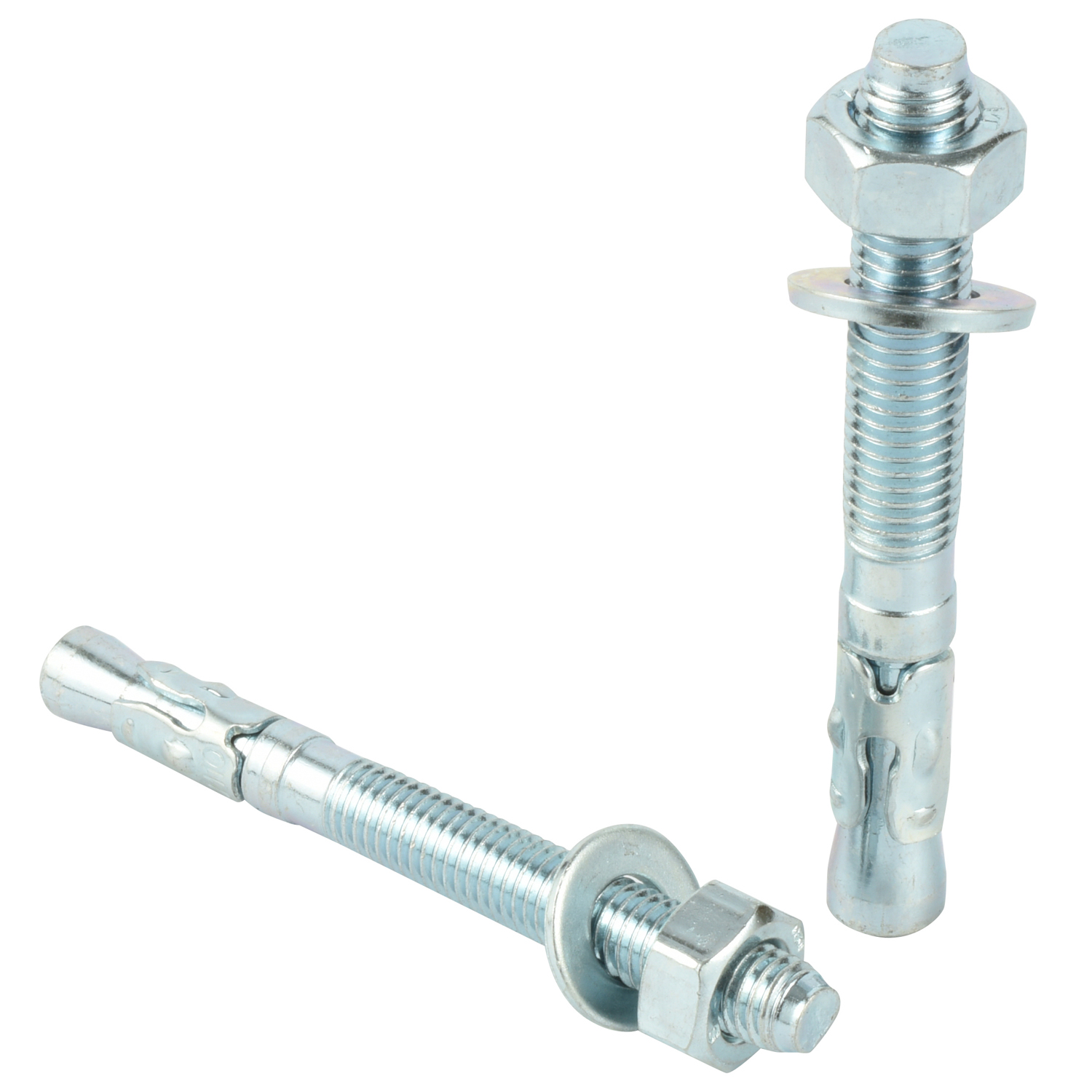
Using the wrong drill bit size for heavy-duty concrete fastening compromises structural integrity. It often leads to failed inspections or catastrophic hardware pull-out. You cannot afford to guess when securing critical loads. The 3/4" wedge anchor serves as a dependable bottom-of-funnel fastening solution. Construction teams rely on them heavily for commercial buildings, structural steel framing, and heavy machinery mounting. These environments demand absolute precision. While answering the bit size question feels straightforward, successful implementation demands much more. You must strictly adhere to depth, torque, and tooling standards. We will explore the exact sizing rules you need to follow. You will also learn the necessary embedment depths and the precise tools required to prevent installation failure.
Direct Answer: A 3/4" wedge anchor requires exactly a 3/4" ANSI-standard concrete drill bit.
Sizing Rule: Unlike other fasteners (e.g., sleeve anchors), a wedge anchor's designated diameter matches its required hole diameter perfectly.
Tooling Requirement: Non-ANSI compliant bits risk creating oversized holes, rendering the wedge anchor useless.
Critical Specs: Minimum embedment depth (typically 3-1/4") and installation torque (typically 110–150 ft-lbs, depending on manufacturer and concrete PSI) are just as vital as bit size.
You must follow a strict 1:1 ratio when drilling for these fasteners. The required drill bit size is always identical to the diameter of the fastener itself. If you install a 3/4" anchor, you must use a 3/4" bit. This differs greatly from sleeve anchors or drop-in anchors. Those alternatives often require a hole larger than their designated size. You do not need to calculate offsets here. The math remains beautifully simple.
Understanding why this rule exists requires looking at the mechanical principle behind the design. They are true-to-size fasteners. The expansion clip sits at the working end. This clip expands outward against the concrete walls. It only grips properly when driven into a precisely matched tolerance hole. If the hole is too tight, you cannot hammer the steel stud inward. If the hole is too loose, the expansion clip will never bite into the base material.
Buyers must rigorously evaluate their tooling for the ANSI B212.15 certification. This standard dictates the exact manufacturing tolerances for carbide-tipped masonry bits. Non-certified bits often feature micro-variations in their cutting heads. They wobble slightly during high-speed rotation. This wobble carves an oversized cavity. When you insert your hardware into an oversized cavity, it simply spins freely. You cannot tighten the nut. An ANSI-certified bit ensures the diameter remains within strict engineering tolerances.
Drilling the correct diameter only solves part of the equation. You must calculate your drill hole depth accurately. The standard formula requires you to drill the hole a minimum of 1/2" deeper than the expected embedment depth. Drilling deeper serves a crucial mechanical purpose. It leaves extra room at the bottom. Settling concrete dust falls into this void. If you skip this extra half-inch, compacted dust blocks the stud from reaching its necessary depth.
You must respect the minimum embedment depth. For a 3/4" wedge anchor, the standard minimum embedment into solid concrete is typically 3-1/4". This measurement dictates how much of the steel body must sit below the concrete surface. Shallow embedment drastically reduces pull-out strength. Always check specific manufacturer spec sheets, as high-load applications may require much deeper embedment.
Torque requirements demand equal attention. A realistic baseline for this diameter sits between 110 and 150 ft-lbs. The exact number depends on the manufacturer and the concrete PSI. Achieving proper torque requires a calibrated torque wrench. You should never use an impact driver for the final tightening. Impact drivers apply uncontrolled, violent force. They easily strip the threads or damage the expansion mechanism.
Structural safety rules dictate strict spacing and edge distance criteria. You cannot install these fasteners too close to one another. You also cannot install them too close to a concrete edge. Doing so creates overlapping stress cones inside the concrete, risking explosive failure.
Specification Parameter | Standard Value for 3/4" Anchor | Purpose & Impact |
|---|---|---|
Hole Diameter | 3/4" (ANSI Certified) | Ensures proper friction grip for the expansion clip. |
Over-Drill Depth | Minimum +1/2" | Provides a collection void for debris and concrete dust. |
Minimum Embedment | 3-1/4" | Guarantees baseline pull-out and shear strength values. |
Installation Torque | 110 - 150 ft-lbs | Activates the clip without causing concrete spalling. |
Minimum Spacing | 7-1/2" (10x Anchor Diameter) | Prevents overlapping internal stress fractures. |
Minimum Edge Distance | 3-3/4" (5x Anchor Diameter) | Prevents the concrete edge from blowing out during expansion. |
Choosing the correct rotary hammer shank type drastically impacts your workflow. You will generally choose between SDS-Plus and SDS-Max shanks. While SDS-Plus systems can technically handle 3/4" bits, they operate at their absolute maximum capacity. Pushing an SDS-Plus tool this hard slows down your drilling speed. We recommend upgrading to an SDS-Max rotary hammer. SDS-Max machines provide better efficiency and superior stability. They excel during continuous heavy-duty drilling at this wider diameter.
Head design plays a massive role in hole quality. You will find 2-cutter and 4-cutter options on the market. We strongly recommend 4-cutter (quad-head) carbide drill bits for 3/4" holes. A quad-head design distributes the impact force more evenly across the cutting face. They reduce vibration noticeably. They maintain a truer, rounder hole from top to bottom. More importantly, 4-cutter bits are far less likely to bind or snap if they strike embedded steel rebar.
You must use the correct power tool. Standard hammer drills simply lack the necessary power. A standard hammer drill uses two spinning ribbed discs to create a vibrating action. This action cannot chip away fully cured concrete at a 3/4" diameter effectively. You need high joule impact energy. A dedicated rotary hammer uses a pneumatic piston to drive the bit forward aggressively. This pneumatic hammering action is entirely mandatory for heavy construction tasks.
Even perfectly drilled holes will fail if you ignore proper preparation. Inadequate hole cleaning remains the leading cause of installation failure. Concrete dust acts like microscopic ball bearings. Leaving this dust in the hole prevents the expansion clip from gripping the aggregate. The steel stud will simply slide out when placed under tension. Follow a strict standard operating procedure for cleaning.
First Air Blow: Insert a compressed air nozzle to the very bottom of the hole and blow out the loose dust.
First Brush: Insert a stiff wire brush matching the 3/4" diameter. Scrub the side walls aggressively to dislodge compacted powder.
Second Air Blow: Use compressed air again to remove the freshly dislodged particles.
Second Brush: Repeat the wire brushing motion to guarantee the walls are completely bare.
Final Air Blow: Apply one last blast of compressed air until no visible dust escapes the hole.
Over-torquing represents another massive risk. Many inexperienced installers believe tighter is better. This misconception ruins materials. Applying too much rotational force can spin the entire body inside the concrete. Over-torquing easily strips the upper threads. In worst-case scenarios, excessive force cracks the surrounding concrete entirely. Always use a calibrated torque wrench to hit the manufacturer's specified rating.
Hitting rebar stops many projects instantly. If your bit strikes structural steel, you must stop drilling. Do not attempt to force the bit through. These fasteners cannot anchor into steel. You must abort the hole. Clean the abandoned cavity completely. Fill it with a high-strength structural epoxy. You must then relocate your mounting point according to edge distance guidelines and start over.
Base material matters immensely. You must use these strictly in solid concrete. Never use them in hollow block, brick, or mortar joints. The mechanical expansion force is immense. When you tighten the nut, the spreading clip exerts extreme pressure outward. Hollow block or old brick simply cannot withstand this localized stress. The base material will shatter, destroying your mounting point entirely.
Your environment dictates your material selection. Choosing the right metal alloy prevents long-term corrosion failures. You need a reliable decision framework based on environmental compliance and expected longevity. Not all steel performs the same under stress or moisture.
Zinc-Plated Carbon Steel: This material works best for dry, indoor environments. We often see it used for machinery anchoring inside climate-controlled warehouses or securing indoor structural columns. It remains highly cost-effective. However, it is highly vulnerable to rust if exposed to moisture.
Hot-Dipped Galvanized (HDG): This coating works best for exterior applications experiencing regular moisture exposure. The manufacturing process applies a much thicker zinc coating. This barrier prevents rapid corrosion from rain or high humidity. It offers a great middle ground for outdoor projects.
304 / 316 Stainless Steel: You must use stainless options for submerged, highly corrosive, or chemical environments. Wastewater treatment plants and coastal applications demand 316 stainless steel. While they carry the highest upfront cost, they deliver maximum security and peace of mind against galvanic corrosion.
Success starts with following the core rule: a 3/4" fastener requires a 3/4" ANSI-certified bit. You cannot cut corners on this foundational metric. However, drilling the right size only begins the process. You must treat the bit, the rotary hammer, the hole preparation, and the alloy material as a single, interdependent system. If one element fails, the entire structural safety of your project fails.
Clean your holes meticulously. Measure your minimum embedment depth carefully. Tighten your nuts using only a calibrated torque wrench. These practices separate professional installations from dangerous liabilities. If you need reliable components for your next heavy-duty build, start evaluating your hardware needs today. Browse specific 3/4" wedge anchors and their matching SDS-Max masonry bits to ensure your project stays structurally sound.
A: The anchor will slip and fail to achieve holding value. The expansion clip cannot bridge the gap to grip the concrete walls. You must abandon the hole completely. Fill the ruined void with high-strength structural epoxy, allow it to cure, and re-drill a new hole elsewhere.
A: No. A 3/4" hole in concrete requires the powerful pneumatic hammering action of a rotary hammer drill. A standard power drill or basic hammer drill lacks the joule impact energy. You will quickly burn out the carbide bit and fail to penetrate fully cured concrete.
A: Wedge anchors are permanent fastening solutions. You cannot pull them out once expanded. You must cut the exposed threaded stud flush with the concrete surface using an angle grinder. Alternatively, if you drilled the hole deep enough, you can pound the stud entirely beneath the concrete surface.
A: Length equals your required minimum embedment (typically 3-1/4") plus the thickness of the material you are fastening, plus extra space for the washer and nut (approximately 3/4"). Always add these three dimensions together to find your minimum required total length before purchasing.
