 English


Mechanical expansion fasteners provide unmatched pull-out strength for heavy-duty applications. However, their reliability hinges entirely on exact installation tolerances. You cannot afford guesswork when securing machinery or structural plates. Incorrect hole sizing, improper torque application, or a failure to clear concrete dust can severely compromise the expansion clip's grip. These errors frequently lead to catastrophic fixture failure under dynamic loads.
This comprehensive guide provides a stringent, specification-backed approach. We will show you exactly how to execute these installations safely. You will learn to calculate exact embedment depths accurately. Finally, we will equip you with actionable strategies to mitigate common installation risks.
Substrate Limitation: Designed exclusively for solid concrete; they will fail in brick, block, or mortar.
1:1 Sizing Rule: The carbide drill bit diameter must perfectly match the anchor’s nominal diameter.
Depth Allowance: Holes must be drilled at least 1/2-inch deeper than the intended embedment to accommodate concrete dust and prevent bottoming out.
Thread Protection: Always thread the nut onto the anchor flush with the top before striking with a hammer to prevent thread deformation.
Removal Reality: They are permanent fasteners. For future equipment removal in 4-inch to 6-inch slabs, drilling completely through allows you to pound the abandoned anchor into the subgrade.
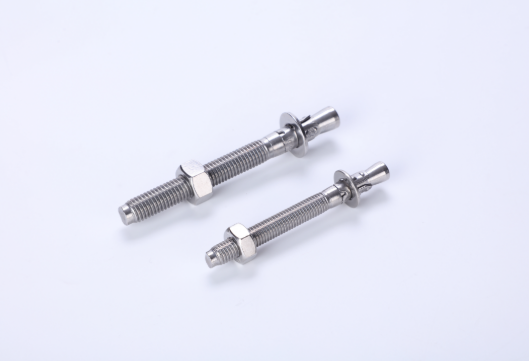
Selecting the right steel wedge anchor prevents over-engineering costs. It also ensures strict compliance with structural load requirements. You must base your selection on exact mechanical formulas rather than visual estimates.
You can calculate the correct anchor length using a specific formula. You must account for the fixture, the embedment, and the hardware.
Length Calculation Formula: Minimum Anchor Length = Fixture Thickness + Minimum Embedment Depth + Hardware Allowance (Thickness of Nut + Washer).
Component | Measurement |
|---|---|
Fixture Thickness | 1/2 inch |
Minimum Embedment Depth | 2-1/4 inches |
Hardware Allowance | 3/8 inch |
Minimum Anchor Length Required | 3-1/8 inches |
Engineering load tables typically dictate the diameter selection. Sometimes, the pre-drilled holes in your fixture determine this requirement. You cannot arbitrarily choose a diameter. The fastener must handle the specified shear and tension loads safely.
Fixture hole tolerances require special attention. The clearance hole in your fixture must be slightly larger than the anchor itself. For example, a 3/8-inch anchor requires a 7/16-inch fixture hole. This prevents binding during installation.
Material evaluation determines long-term structural integrity. You should choose a standard zinc-plated anchor for dry, indoor applications. We recommend specifying 304 or 316 stainless steel for exterior, humid, or corrosive environments. They prevent long-term structural degradation effectively.
Proper pre-installation setup guarantees a compliant installation. You must use the correct drilling equipment. A standard rotary drill will wallow out the hole. This violates mechanical tolerances and ruins holding power. You must use a hammer drill set to the "hammer and rotation" mode.
Drill Type | Impact on Concrete Hole | Tolerance Compliance |
|---|---|---|
Standard Rotary Drill | Wallows out edges, creates oval shapes | Fails (Anchor will spin) |
Hammer Drill (Hammer + Rotation) | Creates precise, circular holes | Passes (Ensures friction grip) |
You need specific tools to complete this job safely. Prepare the following items before starting:
Bit Selection: Use ANSI-standard carbide-tipped masonry bits. The bit size must identically match the anchor diameter.
Cleaning Tools: Gather an industrial shop vacuum, a wire brush, and a compressed air nozzle.
Driving Tools: Keep a heavy hammer or mallet nearby.
Fastening Tools: You need a torque wrench or a standard socket set.
Safety Gear: Always wear safety goggles, ear protection, and silica dust masks.
You must measure the required embedment depth carefully. Always add 1/2-inch to this measurement. This extra space accommodates concrete dust settlement.
Mark the drill bit using bright tape. This ensures a consistent depth across multiple holes. You should drill steadily using the hammer and rotation mode.
Implementation Risk: Failing to drill deep enough poses a severe hazard. The anchor will bottom out before the nut can clamp the fixture securely. You will lose the ability to apply adequate clamping force.
You cannot skip the cleaning phase. First, vacuum the hole thoroughly. Next, use a wire brush to loosen debris sticking to the sidewalls. Finally, vacuum the hole again to remove all remaining loose particles.
Mechanical Principle: The expansion clip relies entirely on friction against solid concrete. Leftover silica dust acts as a dry lubricant. It drastically reduces the holding power of the fastener.
You must prepare the hardware before striking it. Thread the nut onto the anchor so it sits flush with the top "bullnose." This action protects the delicate threads from heavy hammer strikes.
You can use two different insertion methods depending on your project:
Direct Insertion Method: Hammer the fastener directly into the bare concrete hole. Stop when 5 to 6 threads are visible below the surface. After this, you can slide the fixture over it.
Through-Fixture Method: Position the fixture over the hole first. Drop the fastener through the clearance hole. Hammer it until the washer and nut sit flush against the fixture surface.
You need to expand the clip into the surrounding concrete. Tighten the nut using a wrench or a socket. You will feel resistance as the cone pulls up into the clip.
Actionable Metric: It typically takes 3 to 4 full 360-degree turns past finger-tight to fully set the expansion clip against the concrete base.
You must secure the connection to exact specifications. Use a calibrated torque wrench. Meet the specific foot-pounds designated by the manufacturer's spec sheet.
Implementation Risk: Over-torquing does not increase holding power. When applying final torque to your Wedge anchor, excessive force creates serious problems. It risks fracturing the surrounding concrete entirely. Alternatively, it can snap the steel bolt under immense pressure.
Even seasoned professionals encounter post-installation issues. You must know how to identify and resolve these failure points quickly. Evaluating these risks ensures your structural connections remain safe over time.
Spinning anchors represent a common frustration. If the bolt spins in the hole while tightening, the hole is oversized. This happens due to a worn bit or surprisingly soft concrete. Sometimes, it means the dust was not cleared properly. You cannot fix a spinning fastener. The anchor must be relocated to a new, properly drilled hole.
Edge distance violations cause catastrophic blowouts. Installing too close to an unsupported concrete edge creates immense outward pressure. This causes spalling when the wedge expands. Adhere strictly to manufacturer edge-distance minimums to avoid cracking the slab.
Inadequate embedment compromises load capacities. If the load profile changes, a deeply embedded fastener provides maximum pull-out resistance. Shallow embedments are prone to sheer failure. Heavy machinery vibration easily dislodges shallow installations. Always verify depth requirements against expected dynamic loads.
Using these fasteners correctly remains an exercise in strict mechanical discipline. You must adhere to exact tolerances at every stage. From using the exact drill bit size to calculating the proper embedment depth formula, precision guarantees success.
Before breaking ground on your next project, follow these actionable next steps:
Verify your specific load requirements against the manufacturer’s technical data sheets.
Ensure your concrete substrate is fully cured, solid, and free of internal voids.
Equip your installation team with the correct ANSI-rated tooling.
Double-check torque values to guarantee total compliance and safety.
A: No. By design, they are permanent. If a fixture is moved, you must either cut the anchor off flush with an angle grinder or, if you over-drilled the hole through the slab, use a hammer to pound the abandoned anchor down into the dirt below the concrete.
A: This usually occurs because a standard rotary drill was used instead of a hammer drill. It also happens if a worn out or incorrectly sized bit was used. Finally, it can occur if the base material is not solid concrete.
A: No. They exert massive outward force. This force will crack or shatter hollow or brittle substrates like brick, block, and mortar. You should use sleeve anchors or tapcons for those specific materials.
A: It needs to stick out enough to accommodate the thickness of your fixture, the washer, and the nut. You should also leave roughly 5 to 6 threads exposed below the nut before you begin tightening it.
