 English


Engineering realities dictate how we handle structural fasteners. You cannot simply unscrew them. Manufacturers explicitly design them to stay firmly in place. Attempting to forcefully pull out a fully expanded Wedge anchor usually causes severe substrate damage. You risk shattering the surrounding concrete. This leaves you facing complex structural repairs.
We understand the frustration contractors face when modifying floor layouts. This guide provides a pragmatic framework to solve your extraction problems. You will learn how to evaluate the tradeoff between preserving concrete and saving time. We also cover strict compliance requirements for future equipment installation.
You will discover progressive extraction methods ranging from simple concealment to advanced core drilling. Let us explore how you can manage these stubborn fasteners safely and effectively.
Mechanical Reality: The V-shaped expansion mechanism actively fights extraction; raw pulling force risks dangerous "concrete cone" failure.
Contractor Standard: The safest and most common industry methods are concealment—cutting the stud flush or driving it deeper into the concrete.
Progressive Escalation: Extraction should follow a "least-to-most destructive" framework, starting with leverage and ending with core drilling.
Re-Anchoring Rules: Never reuse an extracted hole for a new mechanical wedge anchor; up-sizing the hole or switching to epoxy is required for compliance and safety.
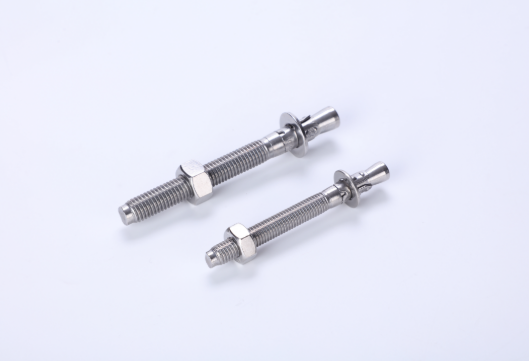
The fastener relies on a highly effective mechanical principle. It utilizes a V-shaped expansion clip. Tightening the nut pulls the conical base upward. This forces the V-clip to expand outward. The action transfers kinetic energy into immense lateral friction against the concrete walls. The clip actively bites into the substrate. This mechanism explains the difficulty of extraction. Material type does not change this behavior. A stainless steel wedge anchor grips the hole just as aggressively as a standard carbon steel variant.
You face severe structural risks if you apply raw vertical torque. The V-clip remains locked against the walls. The fastener itself rarely snaps first. Instead, the concrete substrate yields. A large cone-shaped chunk of concrete fractures and pulls away from the floor. Engineers call this "concrete cone failure." This blowout destroys the surface integrity. It ruins the surrounding slab area. You must break the internal expansion clip before attempting direct vertical pulls.
Contractors must decide whether to extract the fastener entirely or simply conceal it. We use a specific matrix to guide this decision.
Scenario | Recommended Action | Primary Reason |
|---|---|---|
Surface requires a new flat overlay (e.g., epoxy coating, tile) | Concealment (Flush-cut or Drive-deep) | Maintains maximum slab structural integrity. |
Equipment base plates shift slightly off-center | Concealment (Flush-cut) | Avoids overlapping hole damage. Speeds up workflow. |
Existing exact hole must be reused | Extraction | Allows installation of a larger chemical anchor. |
Anchor is severely bent but protruding | Extraction (Brute-force) | Fastener blocks new installations and resists cutting. |
Industry professionals strongly prefer concealment over full removal. It protects the concrete substrate. It saves considerable labor time. We consider these methods the gold standard for standard construction modifications.
This method leverages empty space beneath the fastener. It requires a specific initial installation condition.
Prerequisite: The original installer must have drilled a "drill-past" depth. This means the hole extends at least two inches below the fastener tip.
Execution Steps:
Remove the surface nut completely.
Remove the washer to expose the threaded stud.
Strike the top of the stud firmly using a heavy sledgehammer.
Drive the stud downward until it sits entirely below the concrete surface grade.
Fill the remaining shallow void using an appropriate concrete patch.
Sometimes you cannot drive the fastener downward. The hole might be too shallow. Debris might block the bottom. Flush-cutting provides a perfect alternative.
Tools Required: You need an angle grinder equipped with a metal cutoff wheel. A heavy-duty reciprocating saw also works well.
Execution Steps:
Put on protective safety glasses and heavy work gloves.
Align your cutting blade perfectly parallel to the concrete slab.
Cut the exposed steel wedge anchor flush against the surface.
Grind down any remaining sharp burrs.
Safety and Outcome: This process poses zero risk to the surrounding concrete. It proves ideal when shifting equipment base plates slightly. You achieve a perfectly flat floor instantly.
Certain projects demand complete fastener removal. You might need to reuse the exact location. You must extract the unit without shattering the concrete. We utilize low-destruction techniques to accomplish this safely.
This method works best for partially engaged anchors. It uses combined leverage and rotation.
Thread the nut back onto the stud loosely. Leave a small gap above the concrete.
Wedge a heavy-duty pry-bar underneath the nut.
Apply steady upward tension.
Attach an impact drill to the top of the stud.
Rotate the stud rapidly while maintaining upward leverage.
The spinning action slowly walks the un-wedged assembly upward. The rotation prevents the V-clip from locking firmly into the concrete walls.
We use this advanced technique for specialized or highly sensitive substrates. It physically destroys the friction bond.
Tap the top of the fastener downward slightly. This disengages the V-clip from the internal cone.
Introduce a mixture of water and fine abrasive grit into the hole. Jeweler's abrasive works exceptionally well.
Attach an impact drill. Spin the stud in a neutral position.
Allow the spinning action to mix the water and grit.
This abrasive slurry grinds down the internal wedge mechanism. It shrinks the clip profile. You can eventually pull the stud out using standard locking pliers.
Rust and mineral deposits often fuse old fasteners to the concrete. Thermal dynamics offer a powerful solution. You apply localized high heat directly to the exposed stud using an industrial heat gun. The metal expands rapidly under high heat. The concrete does not expand at the same rate. This differential micro-expansion breaks internal rust bonds. Let the metal cool and contract slightly. You can then apply a puller tool to extract the loosened stud.
Best Practices for Thermal Extraction
Never use an open flame torch indoors or near flammable epoxies. Always rely on a precision electric heat gun. Wear thermal-rated gloves. Wait three minutes after heating before attempting extraction.
Some fasteners completely defy low-impact methods. They spin freely but refuse to pull upward. They bend under leverage. You must escalate to brute-force destruction. These methods prioritize removal over substrate preservation.
This tactic attacks the internal structure directly. You destroy the expansion mechanism from the inside out.
Cut the top section off the protruding fastener. Make it perfectly flat.
Use a heavy center-punch to mark the exact middle of the remaining steel core.
Equip a heavy-duty drill with a premium solid carbide bit.
Drill directly down through the center of the anchor body.
The drill destroys the central cone. The side clips lose their tension. You can easily fish out the remaining metal fragments using a magnet or pliers.
Over-coring removes the fastener and the surrounding concrete simultaneously. You use a hollow diamond core bit. The bit must be slightly larger than the original fastener diameter.
Center the hollow bit over the stud. Drill down past the depth of the expansion clip. You cut a clean ring of concrete out around the fastener. The entire concrete core and the trapped steel block slide out together. This leaves a clean, oversized circular void.
We consider this the final option. It causes intentional surface damage.
Use a cold chisel or an SDS chipping hammer. Carefully break away a 1-to-2-inch crater around the surface hole. This exposes the upper sleeve of the fastener. Clamp heavy-duty locking pliers onto the exposed metal body. Twist and pull simultaneously. Note that this method requires extensive surface patching afterward.
Common Mistakes to Avoid
Do not attack a steel core using standard masonry drill bits. The masonry bit will melt instantly against the hardened steel. Always invest in specialized carbide or cobalt bits for internal core destruction.
Removing the old hardware only solves half the problem. You must restore the substrate safely. Structural compliance strictly governs how you handle the newly created void.
You cannot simply pour patch material into a dirty hole. Debris compromises chemical adhesion.
Use stiff cylindrical wire brushes to scrub the interior hole walls.
Attach a nozzle to an air compressor. Blow compressed air directly into the base.
Repeat the brushing and blowing process three times.
Ensure you remove all steel shavings and fine silica dust.
The empty void creates a weak point in the slab. You must restore the compressive strength.
Specify high-strength polyurethane resins for shallow holes. Use structural epoxy resins for deep void filling. Inject the compound slowly from the bottom up. This prevents trapped air pockets. Use a trowel to flatten the top surface. Emphasize "feathering" the outer edges. Feathering blends the repair material smoothly into the surrounding concrete. This creates a seamless floor finish.
Engineers enforce strict rules regarding hole reuse. You must follow these guidelines to prevent catastrophic equipment failure.
The Golden Rule: A mechanical steel wedge anchor cannot be installed in a patched hole. Patching materials lack the necessary friction properties. Expanding clips will easily fracture the epoxy patch under load.
Compliant Alternative Solutions:
Use a Chemical Anchoring System: Fill the cleaned hole with structural anchoring epoxy. Insert a threaded rod immediately. The epoxy bonds chemically to the concrete walls.
Up-Size the Hole: Use a larger masonry bit to drill out the old hole. Install a completely new, larger diameter fastener.
Adjust the Equipment Flange: Shift your base plate slightly. Drill into virgin concrete at least two inches away from the old patched hole.
Removing structural fasteners requires patience and strategy. Do not fight the engineering. Attempting raw vertical pulls will almost certainly damage your concrete slab.
We recommend defaulting to concealment methods whenever possible. Cut the stud flush or pound it deep into the slab. Only pursue extraction if the specific hole location proves absolutely critical for your equipment re-installation. Escalate your extraction methods carefully. Start with leverage and spinning techniques before resorting to core drilling.
Finally, always prioritize structural integrity. Consult a licensed structural engineer if the concrete slab shows visible cracking. You must also seek professional advice if you plan to re-anchor heavy load-bearing equipment in the same immediate vicinity.
A: You can use the friction-weld method. Attach an impact drill to the stud. Spin it at high speed to melt and break the internal friction bond. Alternatively, use the upward-leverage method. Wedge a pry-bar under the nut. Apply strong upward force while rotating. This forces the internal wedge to bite or aligns it for easier extraction.
A: Male anchors feature protruding threaded studs. You can easily cut them flush or pound them downward. Female anchors sit completely flush or below the surface. They rely on drop-in internal threading. You must drill out their internal threads or use an annular cutter to over-core the surrounding concrete to extract them.
A: No. You must never reuse an extracted fastener. The internal expansion clip deforms permanently during its first installation. A reused clip cannot grip the concrete properly. It compromises all sheer and pull-out load ratings. Always discard old hardware and install completely new fasteners for structural safety.
