 English
Author: Site Editor Publish Time: 2026-06-13 Origin: Site


Installing a wedge anchor at the wrong depth compromises the entire structural integrity of your fixture. This single error often leads to catastrophic pull-out or sudden concrete failure under heavy load. You simply cannot afford to guess when structural safety is on the line.
Embedment depth is never an arbitrary measurement. It is a strictly calculated metric depending heavily on bolt diameter, concrete compressive strength, and the specific load type. Tension and shear forces dictate exactly how deep your hardware must sit in the concrete to perform securely.
This guide breaks down the engineering formulas and industry-standard minimums you need. You will discover practical calculation frameworks fully aligned with ICC-ES and ASTM building guidelines. We also cover scenario-specific recommendations to help you guarantee a compliant, fail-safe installation every time.
The Golden Rule of Sizing: Total anchor length equals Fixture Thickness + Nut/Washer Thickness + Minimum Embedment Depth.
Hole Depth vs. Embedment: Always drill the hole a minimum of 1/2” deeper than the intended anchor embedment to accommodate concrete dust and prevent bottoming out.
Concrete Thickness Constraint: The base concrete must typically be at least 1.5 to 2 times thicker than the anchor's embedment depth to prevent blowouts or structural weakening.
Purchasing the wrong length wedge anchor creates immediate business problems on the job site. If you select hardware too short, you face insufficient holding power and dangerous liability risks. If you buy hardware too long, you waste valuable labor time drilling excessive holes and burn through material budgets unnecessarily. Precision sizing eliminates both issues instantly.
You can determine the exact size requirement using a highly reliable standard equation. Total Anchor Length equals the Minimum Embedment plus the Thickness of the Fixture plus Space for the Nut and Washer. Memorizing this formula prevents sizing errors before you even place a hardware order.
We must clearly define the concept of "effective embedment" to avoid calculation mistakes. Effective embedment measures the distance from the top surface of the concrete down to the deepest structural point of the anchor. Do not confuse this metric. It is absolutely not the total depth of your drilled hole. You will always drill slightly deeper than your effective embedment target.
Standard engineering practice requires leaving adequate space on the threaded end. You must allow a distance exactly equal to the diameter of the anchor to accommodate the nut and washer. If you install a 1/2-inch diameter anchor, add an extra 1/2 inch to your total length calculation.
Consider a practical sizing example to solidify this rule. Imagine you are mounting a 2-inch thick steel base plate. You select a 1/2-inch diameter anchor. Your minimum embedment requirement is 2-1/4 inches.
Embedment Depth: 2.25 inches
Fixture Thickness: 2.00 inches
Nut & Washer Allowance: 0.50 inches
Total Length Needed: 4.75 inches
Since manufacturers rarely produce a 4.75-inch option, you simply round up to the next available standard size. A 5-inch length perfectly satisfies this specific installation requirement.
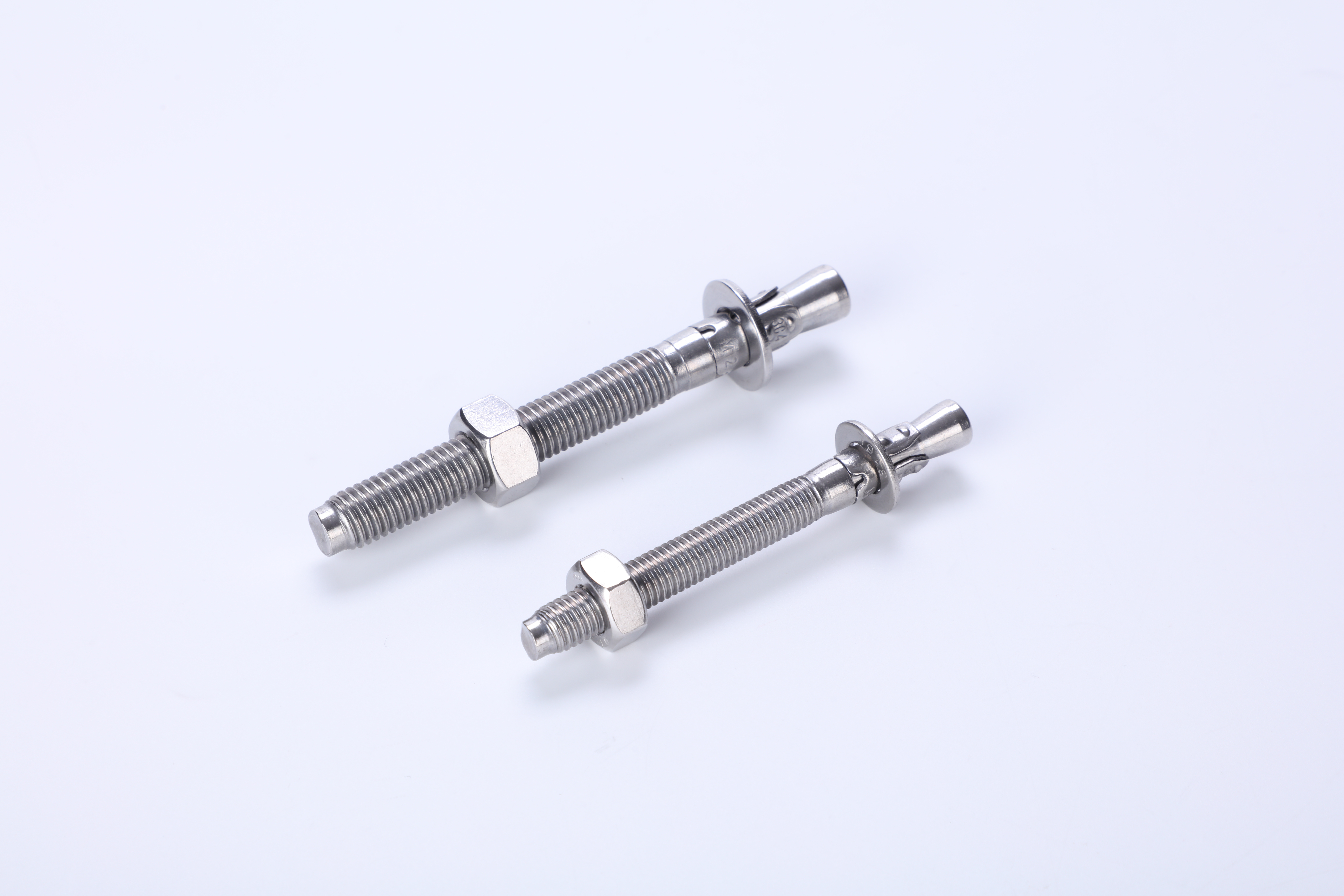
Structural building codes closely regulate installation depths based on absolute minimums. Smaller diameters obviously require less concrete depth. However, they naturally support drastically lower tension loads. Your selected anchor diameter ultimately dictates the baseline depth allowed by modern safety codes.
Contractors rely on established industry frameworks to standardize their installations across different sites. While custom scenarios exist, the following measurements provide a reliable manufacturer-agnostic baseline. Use this reference table when planning your initial concrete drilling strategy.
Anchor Diameter | Standard Minimum Embedment Depth | Recommended Hole Depth |
|---|---|---|
1/4 inch | 1-1/8 inches | 1-5/8 inches |
3/8 inch | 1-1/2 inches | 2 inches |
1/2 inch | 2-1/4 inches | 2-3/4 inches |
5/8 inch | 2-3/4 inches | 3-1/4 inches |
3/4 inch | 3-1/4 inches | 3-3/4 inches |
Common Mistake: Installers frequently assume a larger anchor diameter automatically compensates for a shallow hole. This is completely false. A 3/4-inch bolt placed only 2 inches deep will catastrophically fail under moderate tension.
We must emphasize a crucial E-E-A-T disclaimer regarding these numbers. These measurements serve only as general baselines for standard applications. You must always consult specific manufacturer Technical Data Sheets (TDS) before drilling. Different concrete compressive strengths directly alter precise tension and shear load capacities. Structural engineers always reference TDS documents to verify compliance.
Understanding the actual physics of fastening performance validates why we strictly enforce depth requirements. A wedge anchor relies entirely on mechanical expansion. Tightening the nut pulls the bottom cone up into the expansion clip. This action wedges the metal tightly against the concrete wall. Depth determines the total surface area available for this friction grip.
We must clearly differentiate between tension and shear loads. Tension load represents force pulling straight up and out of the hole. Shallow embedment drastically reduces pull-out strength because the grip area is insufficient. Conversely, shear load represents downward or sideways force across the concrete surface. Shear strength relies heavily on the solid steel diameter of the anchor rather than depth alone.
An improperly embedded anchor rarely slips out of the hole cleanly. Instead, heavy tension causes a dangerous phenomenon known as concrete cone failure. If you place an anchor too shallowly under heavy load, the steel holds firmly, but the surrounding material shatters. The force rips a massive, cone-shaped chunk of concrete entirely out of the slab.
Deeper embedment forces the tension load deeper into the slab core. This distributes the stress across a much larger, heavier volume of concrete. The deeper you go, the harder it becomes for the load to fracture the surface material.
Load Type | Primary Failure Mode | Impact of Insufficient Depth |
|---|---|---|
Tension (Pull-out) | Concrete Cone Failure | Drastic reduction in holding capacity. Concrete shatters upward. |
Shear (Sideways) | Steel Snapping / Bending | Minimal impact on shear, but shallow depth causes surface spalling. |
Deep embedment introduces another engineering constraint. The underlying concrete slab must remain sufficiently thicker than your embedment depth. Industry standards dictate the base material must be at least 1.5 times thicker than your intended depth.
Drilling too close to the bottom of a slab causes underneath spalling. The downward pressure of the hammer drill, combined with anchor expansion forces, blows out the bottom concrete layer. This blowout destroys structural integrity and completely nullifies the anchor's rated holding value.
Field installations frequently encounter high-stakes scenarios challenging standard calculations. Real-world experience shows depth rules shift dramatically based on environmental factors and equipment types. Addressing these realities prevents critical failures during complex building projects.
Heavy Dynamic Loads (Automotive Lifts & Machinery): Static loads simply sit still. Dynamic loads vibrate, shift, and pulse. Automotive lifts represent extreme dynamic stress. They require maximum embedment depths often heavily exceeding standard minimums. You must strictly adhere to specific PSI concrete requirements. High risk of cyclical stress failure occurs if you embed the hardware too shallowly. Vibrations slowly crush the concrete dust around the clip, loosening the grip entirely.
Wood-to-Concrete (Sill Plates): Framers bolt sill plates to concrete foundations daily. You must focus on calculating the exact thickness of your treated lumber. Remember the difference between nominal and actual lumber sizes. A 2x4 board actually measures 1.5 inches thick. Add this actual thickness to your minimum embedment requirement. Accurate math helps you easily avoid code violations during strict framing inspections.
Outdoor & Wet Environments (Hot Tubs, Exterior Railings): Depth requirements remain constant here, but material choice changes everything. You must shift from standard zinc-plated hardware to 304 or 316 Stainless Steel. Subterranean rust presents a massive risk outdoors. Moisture seeps down the bolt threads into the embedment pocket. Rust corrodes the expansion clip, totally compromising grip friction regardless of your perfect embedment depth.
Best Practice: Always verify your concrete slab meets the required PSI before installing dynamic load equipment. Soft concrete drastically reduces the holding power of any fastener, forcing you to seek alternative epoxy solutions.
A perfectly calculated mathematical depth becomes completely useless if your physical execution is flawed. Field technicians must follow standard operating procedures strictly. Proper technique ensures your wedge anchor achieves its rated engineering values.
Executing a flawless installation requires specific tools and unwavering attention to hole preparation. Follow this professional execution sequence.
Implement a Strict Drilling Strategy: Use a high-quality rotary hammer drill equipped with an ANSI-standard carbide-tipped bit. The bit diameter must exactly match your anchor diameter. Never use a larger bit hoping for an easier fit. Use mechanical depth gauges built into the drill. Alternatively, wrap bright tape tightly around the drill bit. This visual marker guarantees your hole reaches at least 1/2 inch deeper than the target embedment.
Execute Aggressive Hole Preparation: Concrete dust acts like a dangerous lubricant. It physically prevents the anchor from reaching the required depth. You must clear the hole completely. Use a stiff wire brush to loosen caked dust from the walls. Follow up instantly with a vacuum or blown compressed air. Trapped debris causes the hardware to bottom out prematurely, ruining your carefully planned depth calculation.
Seat the Hardware Correctly: Thread the nut onto the top until it sits flush with the uppermost threads. This protects the delicate threading from heavy impact damage. Strike the assembly firmly with a hammer until the washer sits perfectly flat against your fixture. The embedded clip should now rest directly at your mathematically calculated depth.
Verify Torque Requirements: Proper tightening expands the subterranean clip against the clean concrete walls. Never use an impact wrench. Over-torquing the nut will literally pull the anchor up and completely out of its proper embedment pocket. This action shears the concrete internally and destroys the holding value. Always use a calibrated manual torque wrench. Cite standard manufacturer torque values for your specific diameter.
Correct anchor depth remains a non-negotiable structural requirement. It relies on a precise combination of fixture thickness and standard minimums based on hardware diameter. Skipping the math leads directly to dangerous pull-outs or wasted materials.
Use a simple shortlisting logic for your next project. Evaluate your total load requirements first, focusing specifically on tension versus shear force. Select the diameter required to safely support that specific load. Finally, use the sizing formula to purchase the correct overall length for the job.
Your next action is straightforward. Always consult your structural blueprints or the specific manufacturer's TDS to verify exact load capacities before finalizing your hardware order. Precision upfront guarantees structural safety long after you leave the job site.
A: Generally, no. As long as the top threads protrude enough to fully secure your fixture, nut, and washer, extra depth is perfectly fine. Drilling deeper actually provides a beneficial hollow pocket. This extra room comfortably houses any remaining concrete dust, ensuring your hardware seats flawlessly without bottoming out.
A: No. In fact, drilling entirely through the slab causes a blowout underneath. This blowout severely weakens the structural integrity of the concrete directly at the base. You must actively maintain minimum slab thickness requirements, ensuring the concrete remains at least 1.5 times thicker than your intended embedment depth.
A: Stop drilling immediately. Attempting to forcefully hammer hardware against solid steel rebar will completely prevent proper seating and mechanical expansion. You must either relocate the hole slightly or consult a structural engineer for an alternative fastening solution. Engineers frequently recommend high-strength epoxy or chemical alternatives in these difficult situations.
